Author: Brynn Boyer

Tornado Drill March 20

The University will participate in the statewide tornado drill on Tuesday, March 20. At 9:30 a.m. as part of the drill, UMW will hold a communication test of all alert notification networks, including the Area Warning System and AlertUMW.  At this time, supervisors should take the opportunity to review plans with their departments about the location of a safe shelter and refuge in the event of an actual tornado. Please review the attached guidelines about tornado preparedness developed by the Virginia Department of Emergency Management.

For more information about the statewide tornado drill or about tornado preparedness, visit http://www.vaemergency.gov/readyvirginia/stay-informed/tornadoes-stayinformed and http://www.vaemergency.gov/readyvirginia/stay-informed/tornadoes/preparingfortornadoes.

— This message is from the Office of UMW Public Safety & Community Services

Eagle Nation Day

This Saturday, March 17, UMW will hold Eagle Nation Day, in conjunction with the baseball and softball doubleheaders. The event, held at the Battleground Athletic Complex from 12:30 p.m. to 5 p.m., will feature free food and beverages, free Eagle Nation t-shirts, giveaways and prizes.

In addition, area Little League players will have a meet-and-greet with the UMW baseball team at 11 a.m. and with the softball team at 2:30 p.m.

We hope members of the community will be able to attend. All aspects of the event are free and open to the public.

Historic Preservation Students Blend Humanities and Sciences

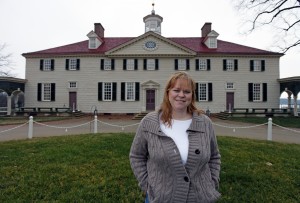
Historic preservation major Audra Medve is an intern at Mount Vernon

When Audra Medve first visited Mount Vernon as a child, she was struck by the timelessness of George Washington’s home, so much so that she returned dozens of times. She never could have imagined she would be an intern at the estate decades later as a senior in the historic preservation program at the university named for Washington’s mother.

Medve enrolled at the University of Mary Washington after the Navy transferred her husband to the Washington, D.C. area in 2008.

“There are very few undergraduate degrees in historic preservation available in the United States, and when I decided to return to school I realized I lived within 30 miles of a truly wonderful program,” Medve said.

Medve’s internship is one of a dozen this spring through UMW’s historic preservation department, regarded as among the best in the nation. Each year, internships range from local preservation organizations like the Historic Fredericksburg Foundation and the Fredericksburg Area Museum, to organizations in Richmond and Washington, D.C., such as the Smithsonian Institution, and even National Park Service sites across the country.

“Given our program’s interdisciplinary basis, we see internships with organizations representing all of our fields: archaeology, architecture, museums and planning,” said Doug Sanford, professor and Prince B. Woodard chair of historic preservation.

On the first day of her internship at Mount Vernon, Medve expected to work on a door from a barn, or cellar, or maybe a back room of the first president’s estate. Much to her surprise, the manager of the project led her to one of the main doors of the mansion.

As an intern, Medve performs the duties of an assistant to the Restoration Manager Steven Mallory, with her main task to restore a door from the 1750s to its original color and condition. The process requires paint analysis of dozens of layers of centuries-old paint with the assistance of conservator and paint analysis expert Susan L. Buck.

“[Her project] is the perfect example of the blending of humanities and the sciences,” Assistant Professor of Historic Preservation Michael Spencer said.

Medve is able to apply coursework from seven or eight different historic preservation classes to her internship.

“You can’t help but be in awe of all the stuff you learn,” she said.

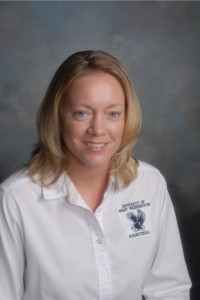
LeeAnne Brooks uses infrared thermography technology at Shelton House

For senior LeeAnne Brooks, her three internships have reinforced her decision to pursue a career in historic preservation.

“The hands-on experience is helping me to prepare for the job market,” Brooks said. “I love that the reality of historic preservation is even more exciting than the classroom experience led me to believe.”

This semester, Brooks is volunteering at Richmond National Battlefield Park’s Shelton House at Rural Plains Plantation in Hanover County, using infrared thermography (IRT) technology to find original features of the historic house. IRT is the measurement of surface temperature distribution through non-destructive methods, Spencer explained.

Barbara Yocum, senior architectural conservator with the National Park Service, said she is grateful for the work of UMW’s historic preservation interns at Shelton House.

“The infrared thermography study has provided valuable insights on the construction of the house that will be included in an upcoming historic structure report on the building,” said Yocum, noting that the more than 250-year-old house sustained shelling during the Civil War.

“This is a leading edge interpretation,” Spencer, who advises both Medve and Brooks, said.

Brooks explained that the process helps minimize the hidden costs associated with preservation work, allowing for a more accurate estimate of the restoration process.

“I love the hunt, the hidden stuff,” she said. “It’s like finding Waldo.”

As an adult student, Brooks’ main motivation is a career she loves. She’s well on her way with the historic preservation program.

“Here was an opportunity to work in history; to do something that I can be passionate about.  I’ve always loved historic buildings and sites, and here is a career in helping to protect some of this country’s most valuable resources – it is a natural fit,” she said.

The fieldwork projects like the ones at Rural Plains and Mount Vernon are a way for students to take lessons learned in the classroom to a new level.

“This highlights the caliber of students that are graduating,” Spencer said. “We are always thinking ‘how can we set our students on the right track?’”

# # #

By: Brynn Boyer

Month of Microfinance Starts in April

The 2012 Month of Microfinance, based at the University of Mary Washington, will make its national debut this April at dozens of college campuses across the country.

The Month of Microfinance, a coalition of student-led and student-focused organizations dedicated to microfinance, is led by the founders of TDC and includes seven collegiate microfinance clubs: La Ceiba, MFI Connect, Campus MFI, Penn Microfinance, The Phoenix Fund and High School Kiva. With 42 partners, including, Kiva, Opportunity International, Accion USA, BRAC USA and Grameen America, the national movement is growing.

During April, students at participating colleges, universities and high schools will host and participate in campus events related to microfinance for increased awareness and fundraising. Each student-hosted event will focus on the definition of microfinance, the groups that benefit from microfinance and the relationship between client-centered and profit driven microfinance.

“I think it is fair to say that a significant number of microfinance practitioners are asking themselves some tough questions today: Are we value-driven or profit-driven? Are we a movement or an industry?” said Shawn Humphrey, associate professor of economics at the University of Mary Washington and founder of TDC. “By claiming the month of April for microfinance clients around the world, the student microfinance movement will bring attention to the importance of client-centered microfinance. In this approach, the well-being of the clients of microfinance is paramount.”

For details about Month of Microfinance goals and activities, read the press release from Monday, March 12. The group hopes to have 1,000 followers on Facebook by April 1.