Category: Professional Notes

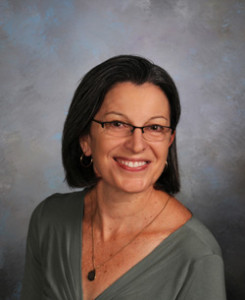
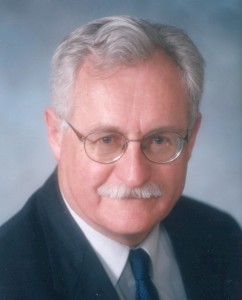
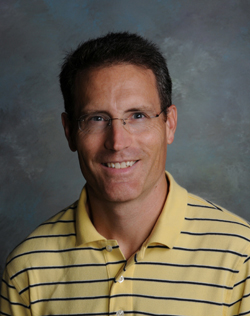
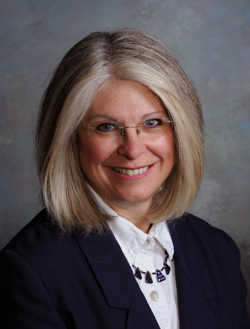
Andrew Dolby and Deborah O’Dell

Andrew Dolby, associate professor of biological sciences, recently presented a research poster titled “Enzyme immunoassay detection of heat shock proteins to quantify the chronic stress response in birds” at a joint meeting of the Association of Field Ornithologists, the Wilson Ornithological Society and the Cooper Ornithological Society. The poster was co-authored by Deborah O’Dell, associate professor of biological sciences, and several undergraduate research students who are participating in the project. The meeting was held in March and sponsored by the University of Nebraska.
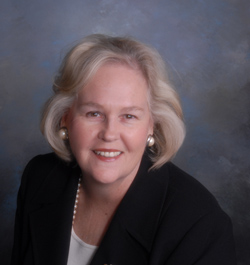
Claudia Emerson

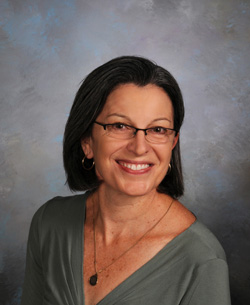
Claudia Emerson, English professor and Pulitzer Prize-winning poet, will be inducted into the prestigious Fellowship of Southern Writers during its biennial meeting to be held during the April 14-16 Conference on Southern Literature.

Emerson will be welcomed into the fellowship alongside 11 other distinguished writers including Harper Lee, author of the Pulitzer Prize-winning bestseller “To Kill a Mockingbird.” As part of Emerson’s induction, she will participate in a panel discussion of revision as an element of the writing process during the conference in Chattanooga, Tenn.

Emerson won the 2006 Pulitzer Prize in Poetry for “Late Wife.” She has written five books of poetry, with a sixth forthcoming. A former Virginia poet laureate who joined the UMW faculty in 1998, she holds the Arrington distinguished chair of poetry at Mary Washington. Emerson received the Donald Justice Award for poetry from the fellowship in 2009.

A highly selective organization that seeks to recognize and encourage literature in the South, the fellowship was founded in 1987 by a group of predominantly male writers that included James Dickey, John Hope Franklin, Walker Percy, Elizabeth Spencer, Robert Penn Warren and Eudora Welty.

New fellows are nominated by current members and elected by majority vote. Fellows are writers of fiction, poetry, drama, criticism and history. Most members have been fiction writers because of the powerhouse world of Southern fiction writing. However, Emerson said that is slowly changing. “As a female poet, it was harder to get in,” she said.

Members aren’t separated by their style of writing, so new ones are judged against all other Southern writers and editors, regardless of genre, Emerson said. “I’m very excited to see fellow writers and colleagues who are already in it and who are being inducted into it now,” Emerson said. “They don’t limit to creative writers necessarily.”

To be considered for membership, a writer must have been born and raised or have resided for a significant part of his or her life in the South, or have written works that in character and spirit embody aspects of the Southern experience.

Emerson said members also include historians, editors, biographers and critics, which is a unique trait for the fellowship. “It’s sort of a broader consideration of what it is to be a ‘writer’,” she said. “I’m excited and honored and always interested in being a part of something that’s trying to promote good writing.”

Emerson also is excited about attending the conference, where she will interact with many writers whom she admires. “I imagine there will be a couple of good parties where you can put on your party dress and meet people you’ve admired forever,” she said.

The fellowship holds its biennial meetings during the Chattanooga Arts & Education Council Conference on Southern Literature in Chattanooga, where the fellowship’s archives are held at the University of Tennessee Lupton Library. At their meeting, the fellows elect new members, bestow awards on established and emerging writers, and deliver readings and lectures.

Alan Heffner

Heffner’s strategic management class worked with the board of Cobblestone Children’s Museum to fine-tune its business plan. The museum’s first traveling exhibit, “Amazing Magnets” will be on display at next weekend’s Multicultural Fair. The Free Lance Star reported on the museum at http://fredericksburg.com/News/FLS/2011/032011/03282011/614961/index_html?page=1

Janet Cropp

Janet Cropp, assistant dean of advising services, served in March as a program proposal reader for the Advising and Adult Learners Commission for the 2011 National NACADA Conference. The conference will be held in Denver, Colorado in October, 2011.

Jason Davidson

Jason W. Davidson, associate professor of political science and international affairs, had the column “America’s Allies and Libya: Why Coalitions Make Sense” published March 30 in the Aspen Institute Italia’s foreign affairs journal.

Read the column at http://www.aspeninstitute.it/aspenia-online/article/america%E2%80%99s-allies-and-libya-why-coalitions-make-sense.

In addition, Davidson has the book ”America’s Allies and War: Kosovo, Afghanistan, and Iraq” scheduled for release in April by Palgrave Macmillan. 

Visit http://us.macmillan.com/americasalliesandwar to learn more about the book, which is especially relevant in light of the unrest and war in Libya.

The publisher’s summary says, “Why do Britain, France, and Italy provide or refuse military support for U.S.-led uses of force? This book provides a unique, multiple-case study analysis of transatlantic burden-sharing. Sixty original interviews with top policymakers and analysts provide insight into allies’ decisions regarding the Kosovo War (1999), Afghanistan (2001), and the Iraq War (2003). The cases show that neoclassical realist factors–alliance value, threat, prestige, and electoral politics–explain allies’ decisions better than constructivist factors–identity and norms. The book briefly covers additional cases (Vietnam, Lebanon, the Persian Gulf War, Somalia) and concludes with recommendations for increasing future allied military support.”

In Patricia A. Weitsman’s endorsement, the Ohio University political science professor writes, “Jason W. Davidson’s exceptional book is a must read for scholars and policy makers interested in knowing why states put troops in harm’s way for the benefit of their allies.  Davidson’s masterful explanation of burden sharing is essential knowledge for students of history and politics, as well as decision makers crafting strategy for the future.”