Category: Professional Notes

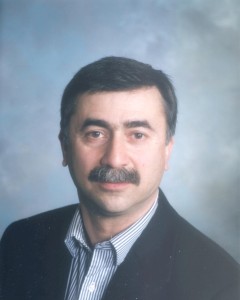
Jim Gaines

James F. Gaines, professor of French, translated Alphonse Daudet’s short story “The Three Low Masses” from the original French, and the translation will be published by the Eerie Digest in February. The story, which first appeared in print in 1866 in “Letters From My Mill,” deals with the ghosts of a priest and his parishioners who, during the 17th century, yielded to the sin of gluttony on Christmas Eve and cheated the Lord of a Mass they were supposed to celebrate. In consequence, they were condemned to reappear each year to repeat the Mass until their penance was completed.
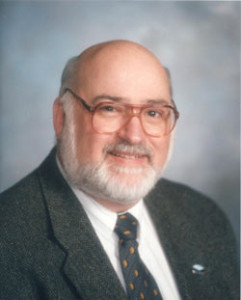
Mehdi Aminrazavi

The first joint program between the Asia Society and the Washington Friends of International Society for Iranian Studies was held at the Whittemore House in Washington, D.C on January 15.  Despite the frigid weather more than 40 people attended.  Guests were welcomed into the historic mansion adorned in holiday decorations by the Asia Society Cultural programmer, Szuhan Chen, and the founder of the Washington Friends of International Society for Iranian Studies (ISIS), Mona Khademi.

Asia Society is the leading global and Pan-Asian organization working to strengthen relationships, promote understanding and address cultural issues across the fields of policy, business, education, arts and culture among the people, leaders, and institutions of the United States and Asia.  They co-hosted the event for this evening with Washington Friends of International Society for Iranian Studies which was founded in 2006 to support and promote the field of Iranian Studies at the international level. ISIS, an affiliated member of the international Middle East Studies Association (MESA), is a private, not-for-profit, non-political organization of persons interested in Iranian Studies in the broadest sense.

The traditional Persian pastries and tea set an appropriate stage to introduce Dr. Mehdi Aminrazavi’s book, The Wine of Wisdom; The Life, Poetry and Philosophy of Omar Khayyam. Dr. Aminrazavi is a professor of philosophy and religion and the director of the Center for Asian and Middle Eastern Studies at UMW.  His areas of specialization are medieval Islamic philosophy and theology, philosophy of religion, and non-Western philosophical and religious thought.  Dr. Aminrazavi has published 10 books and numerous articles including the five volumes of An Anthology of Philosophy in Persia and Suhrawardi and the School of Illumination. He began by providing a synopsis of Omar Khayyam’s life, his mentors and students, and moved on to offer his interpretation of The Rubaiyat.  By attempting to place Omar Khayyam in his own historical context, Aminrazavi elaborated on how the Rubaiyat can be viewed as the literature of resistance against the rise of religious orthodoxy during the Seljuk period.  Omar Khayyam lived at a time when the golden era of Islamic civilization was coming to an end and the age of philosophy, theology and rational thought and the influence of philosophers were being increasingly curtailed.  Dr. Aminrazavi made a correlation between the times in which Omar Khayyam lived and the rise of religious orthodoxy in the present day Islamic world.  He brought his remarks to an end by tracing the odyssey of Omar Khayyam and his Rubaiyat to the West through the translations of Edward Fitzgerald and the Omar Khayyam Club of America in the 1920’s.  Aminrazavi helped to stress his remarks with poetic excerpts from the Rubaiyat in both Persian and English.

The lecture was well received by a diverse audience who clearly had an appreciation and familiarity with literature and poetry.  In an interactive question and answer session, such themes as the poetic quality of Fitzgerald’s translation, the relevance of the Rubaiyat to the contemporary world and the relationship between Khayyam’s philosophical writings and his poetry among others were investigated.  The lecture was followed by a reception and book signing ceremony.

Holly Schiffrin

Holly H. Schiffrin, assistant professor of psychology, was interviewed by the “With Good Reason” public radio program about how lifestyle changes brought on by the recession might be better for one’s well-being.

Schiffrin told “With Good Reason” that one of the surest ways to find happiness doesn’t have to cost a nickel: spending time with friends and family. Schiffrin’s interview appeared during a broadcast called “You Got To Move” that aired the week beginning Saturday, January 1 and that is available online at http://withgoodreasonradio.org/2011/01/the-end-of-obesity.

Schiffrin specializes in child development, parenting practices, positive psychology, and research methods for psychology. She earned a Ph.D. and a master of science in applied developmental psychology from the University of Miami and a bachelor of science in psychology from Mary Washington. She also received a master’s-level certificate in parent coaching from the Parent Coaching Institute at Seattle Pacific University.

“With Good Reason” is the only statewide public radio program in Virginia. It hosts scholars from Virginia’s public universities who discuss the latest in research, pressing social issues and the curious and whimsical. “With Good Reason” is produced for the Virginia Higher Education Broadcasting Consortium by the Virginia Foundation for the Humanities and is broadcast in partnership with public radio stations in Virginia and Washington, D.C.