Author: Brynn Boyer

Dave Toth and Collaborator Win Award

daveDave Toth, assistant professor of computer science, and his collaborator, Dr. Jimmy Franco, an assistant professor of chemistry at Merrimack College, were one of two winners of the 2012 Undergraduate Computational Engineering and Sciences (UCES) Award.  The winners were selected from a set of finalists for the award who were invited to present their work in Boston on February 27th at the 2013 SIAM Conference on Computational Science & Engineering.

The web site of the Krell Institute, which administers the award, states that “the UCES Award program was created to promote and enhance undergraduate education in computational engineering and science (CES). The program encourages development of innovative educational resources and programs, recognizes the achievements of CES undergraduate educators, and serves to disseminate educational material and ideas to the broad scientific and engineering undergraduate community. Awarded annually, UCES is funded by the Department of Energy Computational Science Graduate Fellowship program administered by the Krell Institute.

The purpose of the UCES Award program is to recognize undergraduate faculty who have recently developed courses, programs, and/or curricular material. Such contributions need not be broad in scope, but should be innovative and transferable to other institutions or programs.”

Toth & Franco created a week-long lab activity that teaches students how to perform virtual screening with a supercomputer to identify potential drugs.  They published their work in the Journal of Computational Science Education.  The materials for the activity, including a 27 page full-color lab manual and other materials people would need to use the lab in their own courses are available online.
Office Sustainability Tip of the Week

When most of us think about sustainability, I would imagine the topics that immediately come to mind include reducing waste, recycling on a regular basis, and conserving energy.  But what about the ultimate act of sustainability — donating blood.

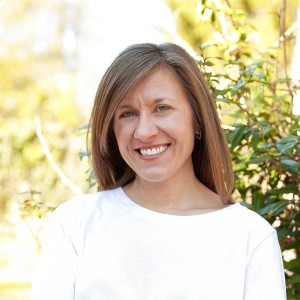
I’ve been donating blood on a regular basis for a little over ten years.  However, I have been technically eligible to donate blood for about 20 (wait–that can’t be right–I cannot be that old!).  So why did I go ten years without donating?  Well, like many people, the main reason I never donated was because I was never asked.  On those occasions when I would pass a blood drive being held at my college while I was a student, I would never seriously considered donating.  I would think of needles and how I’d rather not get stuck with one (how many of you are in this boat?).  No one I knew personally had come and asked me to donate, and no one I knew was donating blood that day, so where was my personal connection with the whole thing?  And probably at that moment I didn’t even have the time to donate.  You know college students–so very busy and only have time for studying and nothing else.  In retrospect, for me these are all pretty flimsy excuses.  When I was in my mid-twenties, a co-worker organized a blood drive and asked me if I wanted to donate.  It was probably the first time I had ever been asked, and I remember initially being hesitant like many of us are when we are asked to do something we’ve never done before.  But after she explained to me what was involved (a mini-physical is performed where the technician checks your pulse, blood pressure, temperature, and hemoglobin level, you answer some basic questions about your lifestyle, travel history, and medication/health history, the donation itself takes about 8-10 minutes, and you then enjoy some refreshments before you leave), it was hard to find a legitimate reason to say no.  I can honestly say that donating blood for the first time changed my life and I’ve been donating either blood or platelets on a regular basis ever since.  I would like to think that most of us live our lives thinking about how we can help others.  When you donate blood, you can save up to three lives.  What better way is there to help others than giving the precious sustainable gift of life?

So if you’ve never donated blood before and are eligible (tips for first time donors), please consider stopping by one of the many blood drives that UMW holds throughout the year.   If you cannot donate because you are ineligible, encourage others to donate.   The Fredericksburg Campus organizes several drives throughout each semester, and the Stafford Campus has been holding blood drives every six months since Fall 2011.  The last blood drive at the Fredericksburg Campus took place on February 19th, and the next blood drive at the Stafford Campus will take place on April 10th.  If you’d like to make an appointment to donate blood on April 10th at the Stafford Campus, please email me (kcaffrey@umw.edu).  Colleges and Universities play one of the biggest roles in collecting blood by holding drives on a regular basis.  These drives are not just for students — they are for staff, faculty, friends, family– anyone and everyone in the campus and local community.  So will I see you at the next blood drive?  You can look for me at the refreshment table.  I’ll be the guy who just saved some lives and is kicking back enjoying a big bunch of Oreos.

For some additional facts about donating blood, go to: http://www.redcrossblood.org/learn-about-blood/blood-facts-and-statistics

If you have any suggestions for things we can all do differently each day to create more sustainable environments, please feel free to leave a comment or email me the idea to be featured in a future Tip of the Week.  The PCS Action Group members for the “Office Sustainability Tip of the Week” are Kevin Caffrey, Elizabeth Sanders, Robert Louzek, and Dre Anthes.

Last Week’s Tip: How To Turn Consumers Green.

UMW Wins CASE Award

UMW’s “Mary Washington First” fundraising publication won an Award of Excellence from CASE.

The Division of Advancement and University Relations received an Award of Excellence from the Council for Advancement and Support of Education (CASE). The award was announced Tuesday, Feb. 19 at the District III conference in Atlanta in recognition of a new publication designed to encourage donors to put “Mary Washington First” in their philanthropic giving and estate plans. A complete listing of all CASE District III awards is available at http://www.casethree.org/award_programs/2013_award_winners.html

Upcoming COAR Events: Variety Show and Spring Festival

COAR's Variety Show will raise money for future Alternative Break Trips with Habitat for Humanity
COAR’s Variety Show will raise money for future Alternative Break Trips with Habitat for Humanity

Mark your calendars: COAR’s Variety Show is fast approaching. The event will be Saturday, March 16 at 7:30 p.m. in the Great Hall. Come out to see UMW’s most talented performers “raise the roof” to support Habitat for Humanity! From a capella groups such as One Note Stand to the UMW Dance Team, the Variety Show will definitely be a night to remember! Admission is free, but bring your spare change for chances to enter raffle drawings for great prizes.  All proceeds will benefit COAR’s Alternative Break Programs, which give students the opportunity to go on Habitat for Humanity trips during Fall and Spring Break.

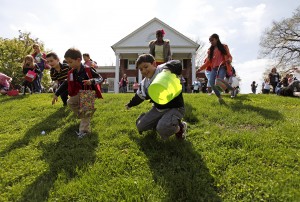
Are you looking for a fun weekend activity with your children? Join COAR at the President’s home at Brompton for an afternoon of fun! This year COAR will be hosting its annual Spring Forward Festival on Sunday, March 24 from 1 to 4 p.m. The afternoon will be filled with spring-oriented crafts and hourly egg hunts. The event is free of charge.

If you have any questions about either event, contact COAR by email at coarumw@gmail.com or by phone at (540) 654-1802.