Category: College of Arts and Sciences

Bonds’ Article Contests Sustainability Discourses Reliant upon “Green” Technology

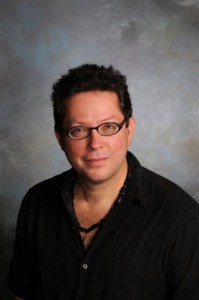
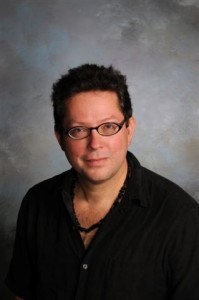
Eric Bonds

While some popular and academic discourses endow “green” technology with heroic powers to both rejuvenate our stagnating economy and bring about a more environmentally sustainable society, Eric Bonds and his University of Colorado co-author Liam Downey argue that it is important to place their development, fabrication, and use within a global context of inequitable relationships between nations.  The authors did just that by examining three cases of ecological modernization in the automobile industry in an article recently published in the Journal of World-Systems Research.  The cases reveal that “green” technologies instituted in wealthy nations are often composed of natural resources extracted from the Global South.  Consequently, such technologies have a real capacity to create environmental improvements in wealthy nations, but may also inadvertently increase environmental degradation and human rights abuses experienced by people living near natural resource extraction projects elsewhere on the globe.  The article, entitled “Green Technology and Ecologically Unequal Exchange,” can be downloaded at: www.jwsr.org.

Nabil Al-Tikriti Delivers Paper at Conference in Crete

On Sunday, July 1, Nabil Al-Tikriti delivered a paper entitled “Grim Advice, Bold Solutions: Idris-i Bitlisi’s 1513 Treatise on the Caliphate and Sultanic Protocols” to the 20th annual CIÉPO [Comité International des Études Pré-Ottomanes et Ottomanes] Conference in Rethymno, Crete, Greece.  The abstract of the paper was as follows:

“Following the intensely chaotic violence of the 1511-13 Şahkulu rebellion and fraternal succession struggle, a wholesale changing of the palace guard ensued. In the course of this transition, several imperial elites applied for court employment and patronage via submissions of poetry, advice treatises, and other forms of cultured knowledge production. While the historical narratives commonly known as Selim-nāmes have attracted a modicum of scholarly attention, treatises submitted at the very beginning of Selim’s reign remain largely unknown. Three examples of such submissions include the anonymous 1512 Risala fi Sharh Qasida Julus Sultan Selim Khan, Idris-i Bitlisi’s 1513 Risala fi al-Khilafa wa Adab al-Salatin, and Shams al-Din Jahrami’s 1514 Risala Siyasiyya Bara-yi Sultan Selim.

In this paper, I shall summarize, analyze, and contextualize the second of the aforementioned three works, the nearly forgotten treatise presented by Idris-i Bitlisi (d. 1520) to “Yavuz” Sultan Selim (d. 1520) in February 1513. In order to place this submission within its immediate context, I shall also detail Idris-i Bitlisi’s biography during the chaotic transition years and briefly summarize the contents of the other two aforementioned treatises. While each of these authors presumably had self-aggrandizing motivations for their respective submissions, the arguments which they put forth in support of Selim’s rule and reign should provide nuanced views of the political theories and public arguments mobilized to support the new Ottoman ruler during a sensitive and divisive period of social upheaval.”

Nabil Al-Tikriti Moderates Forced Migration Workshop at NGO Assembly

In his capacity as a board member of MSF / Doctors Without Borders USA, Nabil Al-Tikriti co-organized and moderated a June 7 workshop on migrant populations preceding the MSF USA 2012 General Assembly in New York City. Panelists included Dr. Alison Mountz of Wilfred Laurier University, Dr. Apostolos Veizis of MSF Greece, and Ivan Gayton of MSF Nigeria.  The workshop description was as follows: “In this workshop, participants will explore the peculiar challenges faced when trying to gain access to migrant populations. Is it possible to adequately serve a population which often intentionally avoids detection, resides primarily in urban contexts, constantly moves or aspires to move, displays inordinate ethnic and linguistic diversity, and exists in a legal limbo vis-a-vis the legal authorities under which MSF operates?  What level of legal risk should MSF international staff be prepared to accept vis-a-vis Frontex, Homeland Security, and other actors legally tasked with controlling, limiting, channeling, and preventing migration?”

Richard Finkelstein’s Article on Shakespeare Appears in Journal

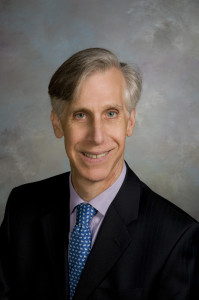
Richard Finkelstein, dean of the College of Arts and Sciences and professor of English, published “The Comedy of Errors and the Theology of Things” in the spring issue of Studies in English Literature, 1500-1900.

The article looks at both theological and mercantile traditions to argue that Shakespeare sees participation in the marketplace as redemptive.

Haitian Development through Home-Grown Capacity Building and Group Organizing

During the first week of April, I undertook a truly transformational journey.  We traveled to the island nation of Haiti, the only country in the world with a last name: “The poorest country in the western hemisphere.”

Despite U.S. government warnings about travel to Haiti (the Department of State strongly urges U.S. citizens to consider carefully all travel to Haiti), we were neither robbed, raped, or murdered.  In the view of U.S. authorities, this might be considered somewhat miraculous.  Not only did I survive, but I returned with a powerful sense of what Haitians can and have achieved, witnessing their organization and capacity building, as well as the often demoralizing, destabilizing, and dehumanizing influence of NGOs and missionary groups on the Haitian people.  (I make this last comment knowing that I may once again be labeled as the anti-Christ or being in bed with the devil.)

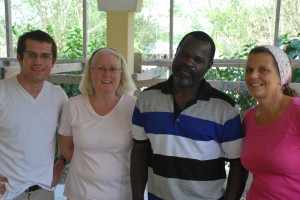
When I planned this trip to Haiti, I left the specifics up to my friend, Carla Bluntschli, who has lived in Haiti for 27 years.  I simply said that I wanted to see and experience Haitian development.  In seven days, I learned more than I ever imagined, and I hope to share some of those lessons here.  Our plan was to visit a number of different organizations, and Carla has a deep network of friends in Haiti.  We visited MCC (Mennonite Central Committee) volunteers and country staff who are working in water, reforestation, and food security; we visited an NGO, Haiti Outreach, which works with communities to create clean water systems; we stayed two nights with Oganizasyon Peyizan 7e Seksyon Kominal Gwomon (OP7G) – the Peasant Organization of the 7th section of the community of Gros Morne, and were astounded by their understanding of their own needs, their organizational skills, and the tasks that they had set for themselves.

Everyday, I was impressed with the Haitian people and their organizations.  OP7G was the most amazing.  We met the first evening with seven of the eleven members of the Executive Committee.  Their definition of development: people working to help others and themselves.  This was a theme that I encountered repeatedly throughout the trip.

OP7G was founded in 2001 and its members received training from PDL (Partenariat pour le Développement Local  – Partnership for Local Development) which works to organize and empower peasants so that they can move forward.  In its first year, OP7G had 47 groups in seven localities serving more than 600 members; ten years on, it has 215 groups working in 28 locations and nearly 2700 members.  Each group meets every week; each month, all groups send representatives to a general meeting.  The goal is for OP7G to look to see what is missing so that they can accompany one another.  They look for what they have and what is missing in their communities.  They undertake an ingenious social mapping program (I have only seen this in Haiti) where every year, they map their communities.  They draw maps that include each household, its members, the type of house, and roof material.  They also determine who has children in school and how many of a family’s children are in school, as well as the number of times a day that a family is able to eat.

There are four economic levels that these data represent, and part of the moving forward is to provide the support so that families can move from the lowest level to the next level.  People are moving up, but as new groups are constantly forming, there are many who are still in level one of economic development.  Groups form around a number of  themes including Health, Agriculture, Education, and Income Generating Activities.

The training that these groups receive from PDL is both simple and complex.  They use simple messages that often take a great deal of time for people to grasp, debate, and come to some conclusion about.  Two examples stand out.  One was a simple diagram of a chicken egg.  If the egg was eaten, it would not hatch.  If, however, the egg hatched, it would produce a chicken which would produce more chickens until such time as people could both eat eggs and see their flocks grow.

Another example emphasizes the need to organize – that there was strength in numbers.  The story was of a big fish who could easily swallow smaller fish.  The small fish decided to organize into small groups, but they were still vulnerable to being consumed by the big fish.  Only when the small groups grew into larger groups were they able to fend off the big fish and ultimately surround it, growing from small fish into larger fish.  The big fish might represent the government, a large landowner, or simply a wealthy person in the community who took advantage of his position.  By working together, groups would be able to grow and expand, and counterbalance the power of the big fish.  PDL’s instructional technique uses large diagrams so that people can easily see and discuss, even if they are not literate.

We met with one NGO, Haiti Outreach, which has progressed dramatically over its nearly 20 years of work.  The organization began by drilling wells and found that a month after the project was finished, the wells no longer worked.  Over the course of a few years and surveys of failed wells, it became clear that without community participation and ownership of the projects, the pumps would continue to fail.  The people had to determine their own needs and their commitment to fulfilling those needs.

Haiti Outreach trains communities for three months and the communities themselves own these projects.  This was a transformation not only on the part of the NGO and how it approached development, but also profound transformation on the part of project participants.  Ownership means paying; if you pay for something it has value and must be cared for.  Today, Haiti Outreach continues to make everyone aware of four points that must be taught, discussed, and committed to before any project is undertaken: authority, responsibility, accountability, and transparency.  It took a decade for this vision to develop and the community has responded remarkably.

In another case, we met a man and woman who had lived for 25 years in the U.S. before returning home to help their community.  Their six children remained in the States and were appalled that their parents were going back to Haiti.  The couple have embarked upon an ambitious program of agroecological development, a field in which neither one of them had any practical experience before returning home.  Their organization, the Association for the Development of Rural Areas, is based on the belief that it is essential that people be able to grown their own food, produce it in an economic and sustainable way, and do so naturally, without the use of chemicals.  This couple now has more than 300 people coming to its demonstration farm for monthly meetings, where they share knowledge and learn about farming techniques.  On the day that we visited, a man from a water organization was discussing ways that communities could develop wells and use the water both for domestic use and for their gardens.  Water availability and conservation are critically important in this far northwestern part of the country where cactus was the dominant vegetation.

At the end of the trip, we were, in my view, used as pawns by a rising politician.  He took us to two different groups and introduced us as development experts who were in the country to see their projects.  That led to some specific questions about what we could do for these organizations.  Even though we repeatedly stated that our goal was simply to learn from Haitians what they were doing themselves to promote development, it was uncomfortable to be put in the situation where we were the “experts” with money to bring.  After we reiterated that we had no money to give to their organizations, there was some awkward silence and some downcast expressions.  Again we tried to talk about what we had seen other groups doing and how successful they had been.  This was a message that we felt compelled to share, but it was the first time that we confronted the expectations of Haitians that “blans” (whites) would give them money.  It was a real learning moment, and demonstrated clearly how dependent that Haitians have become on blans and that we continue to reinforce this dependency with our missions and charity.

In a relocated camp on the last day, as an angry Haitian man asked me why I was taking photos and what I was going to do with them.  When we eventually made clear to him the purpose of our trip, he became a little less angry, but declared that Haitians do not need money.  They need machinery, they need training, they need jobs; they do no need handouts.  Where have the millions of pledged dollars gone?  I don’t know, except that it is yet another example of our flawed development approach to Haiti.

An important lesson of the 2010 Haiti earthquake is that it is far easier to give handouts and create dependency than it is to enable real change and empower peasants to achieve their own objectives.