Athletic Director Ken Tyler was the featured guest on the WFVA 1230 program “Town Talk” on Tuesday, April 23. The interview is available in four segments: Segment #1; Segment #2; Segment #3; Segment #4.
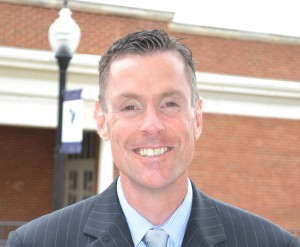
Athletic Director Ken Tyler was the featured guest on the WFVA 1230 program “Town Talk” on Tuesday, April 23. The interview is available in four segments: Segment #1; Segment #2; Segment #3; Segment #4.
Assistant Professor of Mathematics Julius Esunge received a grant from the National Science Foundation to support his participation in the Summer School and Conference on Financial and Actuarial Mathematics in Cameroon. The conference will be held at the University of Buea in Cameroon from April 22 to May 3. As part of the grant, Esunge will present a series of lectures from May 5 to 10.
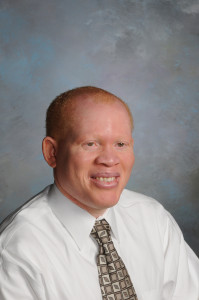
Assistant Professor of Mathematics, Jangwoon “Leo” Lee, traveled to Iowa State University in Ames, Iowa, last weekend to deliver an invited talk at the Spring Central Sectional Meeting of the American Mathematical Society. His talk was titled Discretization of Stochastic Optimal Control Problems by the h x p Version of the Stochastic Galerkin FEM.
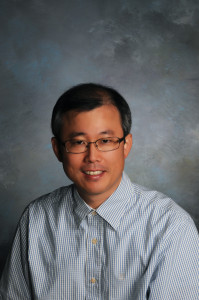
 Mark Snyder, Assistant Professor of Music, had his multimedia work, Butterfly for processed clarinet, electronics and video performed at the 2013 Society of ElectroAcoustic Musicians in the United States (SEAMUS) conference in St. Paul, Minnesota on April 19th.
On April 10th, Mark gave a master class about his music and video art to the computer music department at Peabody Conservatory in Baltimore Maryland.
On April 5th, Mark was a guest artist at Fairmont State University in Fairmont West Virginia. In addition to concertizing his own work and giving a masterclass, Mark took Junior Music and Computer Science major Becky Brown along so she could perform one of her original compositions, Rex for processed harp and voice, and she also gave a master class on harp performance and processing. Out of all his accomplishments this semester, he was most pleased with this since host composer Dan Eichenbaum requested it after hearing Becky perform her piece in composition class when he came to visit UMW.
[vimeo width=”600″ height=”337″]http://vimeo.com/60746178[/vimeo]


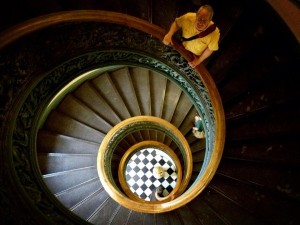
 Andréa Livi Smith, assistant professor of historic preservation and director of the Center for Historic Preservation, wrote an op-ed, “We Don’t Need a Modern-Looking Metro,” for The Washington Post. The piece, which argues that the D.C. metro system’s distinctive design should be appreciated and maintained, appeared in the print edition of the newspaper on Sunday, April 21.