Tag: Division of Teaching and Learning Technologies

DTLT Controls the Vertical and the Horizontal

Image of DTLT at WorkIn January the DTLT group presented at the Educause Midatlantic Regional Conference in Baltimore, Maryland. The panel discussion covered the Digital Storytelling class being taught here at UMW, affectionately know as  ds106Martha Burtis provided an overview of the course, Tim Owens the technical framework, I featured the radio, and Andy Rush closed with our experiments with live, streaming video. It’s not only a great overview of ds106, but it is also a great overview of the chemistry that drives the creative, innovative machine that is DTLT.

[vimeo 35077511 w=640 h=360]

Jim Groom Published in Debates in the Digital Humanities

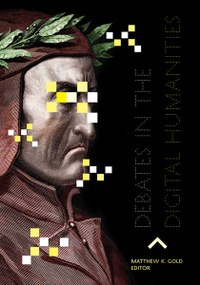
Debates in the Digital Humanities

Jim Groom, Director of Teaching and Learning Technologies, published a co-authored piece with Matt Gold in the recently publishing anthology Debates in the Digital Humanities titled “Looking for Whitman: A Grand Aggregated Experiment.” According to the University of Minnesota Press this volume


….brings together leading figures in the field to explore its theories, methods, and practices and to clarify its multiple possibilities and tensions. Together, the essays—which will be published later as an ongoing, open-access website—suggest that the digital humanities is uniquely positioned to contribute to the revival of the humanities and academic life.


Chronicle Names Jim Groom “Tech Innovator”

The Chronicle of Higher Education has named Jim Groom, director of the Division of Teaching and Learning Technologies, one of 12 “tech innovators who are transforming campuses.” Along with the distinction, Groom is featured in the Sunday, Feb. 26 issue. The article “Self-Described ‘EduPunk’ Says Colleges Should Abandon Course-Management Systems” explores Groom’s involvement with UMW’s digital-storytelling course and his ideas on learning management systems.

George Meadows and Tim Owens’ Work Featured in Campus Technology

George Meadows, associate professor in the College of Education, and Tim Owens in the Division of Teaching and Learning Technologies were featured in Campus Technology for their work with 3D printing in an article titled “Making Stuff: 3D Printing on Campus.” Meadows and Owens are in the process of exploring the technology and documenting the process at UMW Blogs in preparation to integrate the device as a curriculum component to a freshman seminar course in the fall. 3D printing technology allows students to build 3-dimensional models on a computer using free and easy-to-use software and then “print” them by extruding plastic in layers to create an object.

UMW Cited as Model for Future of Networked Learning

UMW, and UMW Blogs in particular, is being heralded in Richard Demillo’s new book Abelard to Apple: The Fate of American Colleges and Universities as a space of great educational ferment, to quote from George Leef’s review of the book here. In fact, Leef’s review not only examines more popular open education mainstays like MIT’s Open Courseware, but spends a bit of time discussing the role of networked culture in re-imagining the future of higher education:

Open courseware is not the only way online learning is going to change higher education. DeMillo observes that whereas the traditional college class involves the broadcasting of information from the professor to (doubtfully alert) students, blogs involve rich connection networks where students and instructors interact and share their questions and information.

In that regard, DeMillo points to a little-known school where there is great educational ferment: “At the University of Mary Washington, learning takes place in the digital spaces engineered by Jim Groom and his band of Edupunks. At UMW, learning takes place in blogs.”

And when highlighting the importance of a networked culture for the future of learning at institutions UMW is highlighted as a model. UMW Blogs provides more than open resources and lectures on the internet, it also enables the ability to interact and share ideas and resources that helps bridge the gap between institutions of higher learning and the web.

James Bacon, proprietor of the Bacon’s Rebellion blog that focuses on all things Virginia, not only gave UMW kudos in for its work with UMW Blogs in his post on the DeMillo book, but also points out what remains the most important lesson of UMW Blogs. The open publishing platform is not remarkable because it is single-handedly transforming higher education (such an assertion would be absurd), but rather it is how this platform embodies “the process of experimentation” that is still in its infancy when it comes to the future of higher education. To Mary Washington’s great credit, it has been on the bleeding edge of innovation in this regard for more than seven years.

Image credit:  Ethan Hein’s “Hyperbolic orthogonal dodecahedral honeycomb”