Princeton Review ranks UMW as a green college
Leaders in Law
UMW alumni named industry leaders by Virginia Lawyers Media
Full Circle
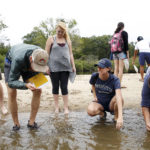
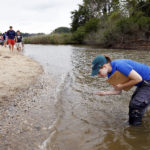
Geology students stand knee-deep in the water, calling out measurements as waves pass by. On shore, their classmates scribble numbers into notepads as the humid breeze blows the choppy waters of the Potomac River onto the sandy beach beneath their feet.
UMW alumna Pamela Grothe used to be one of those students, but today she’s snapping pictures and working with the group in a different role.
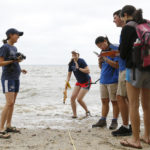
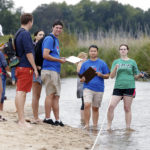
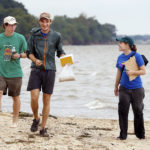
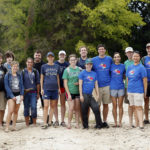
A 2006 graduate, Grothe returned to UMW this past August to fill the position of her previous professor and long-time mentor Neil Tibert, who died unexpectedly last year. Having come full circle from geology student to professor, it’s now her turn to instill a love of the subject into students that Tibert once gave her.
“I feel privileged that I can stand here in his footsteps,” said Grothe, who did research in the Dominican Republic with Tibert as an undergraduate. “I can only hope to teach as well as he did and inspire students as they continue along in their academic and professional careers as he did for me.”
After graduation, Grothe stayed in touch with Tibert, getting advice on graduate school and her doctorate program, which she is currently finishing at the Georgia Institute of Technology. Her next career goal: to find a college-level teaching position with a tight-knit geology department just like the one at UMW.
“I always knew I wanted to teach in some capacity,” said Grothe, who came to UMW as an education major before switching to geology. Then last spring, in the wake of Tibert’s death, she got a bittersweet offer to return to UMW as a visiting professor.
A class full of mostly geology majors, you can sense the enthusiasm of the students as they sketch the sand dunes and measure the distance between ripples in the water. The field trip, one of several for the course, will help the class understand modern environments by comparing and contrasting the Rappahannock River and the Potomac River.
“I feel like a detective,” said junior and geology major Andrew Bolton, describing the study of rocks. “It’s like a picture and you can look at it and find out what the world was like so long ago.”
Crouched down in the water, surrounded by students, Grothe seems right at home. As an outdoor enthusiast with a passion for teaching – and for her alma mater – it’s clear she has found her calling.
“I came to UMW as an undergraduate looking for close relationships with my professors,” said Grothe, smiling. “And now the best part of this job is getting to work so closely with the students.”
Film Star
Miranda Schnakenberg had planned to write a paper about a Gothic novel for an independent study. But she ended up shooting a movie and developing an entirely new passion.
The senior English major, who has a concentration in creative writing, admits she has lofty career goals as a writer. She aims to write “Everything! Novels, poetry, films . . . .”
At the same time, she always loved movies. So when she began work on her independent study with UMW English Professor Antonio Barrenechea, Schnakenberg took it more than a step further and created a film. Her goal: “go all in.”

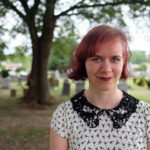
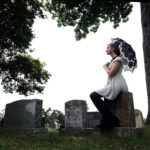
Filmed in Alum Spring Park last April, the Confederate Cemetery and various locations around campus, the haunting film is based on an 1872 novel, “Carmilla,” one of the earliest examples of vampire fiction by Irish author Joseph Sheridan Le Fanu. “Carmilla” was one of the first works of its kind in the burgeoning genre of Gothic fiction. Schnakenberg enlisted several friends—theatre majors—to act in the film. Catherine O’Meara and Gwen Levey shined in the lead roles, and cameraman Alexander Rios “was instrumental in the process,” she said.
In Schnakenberg’s adaptation, the imagined Gothic past and modern-day realism are intertwined in a tale that’s both compelling and creepy, with a touch of the macabre thrown in. The distressed heroine arrives on a Virginia doorstep, she of pale face and dramatic mannerisms, asking for help from the 21st-century lady of the house. It’s not long before the viewer realizes that there’s something a bit, well, off about this heroine.
The screenplay took Schnakenberg almost 10 days to write, then nearly two weeks of filming and several days of editing. “You learn the most about filmmaking in the editing process,” she said. The final product—the 20-minute film—was shown during the Department of English, Linguistics and Communication’s Kemp Symposium last spring.
“I was impressed with the way she was bringing together things she’d learned across different courses to produce her adaptation of Carmilla,” said Kate Haffey, assistant professor of English. “This really represents the type of thinking that we want students to do in the liberal arts, making critical connections across different disciplines.”
Barrenechea agrees. “Hearing her talk about the process of adaptation, from page to screenplay, casting, photography, and editing, was fascinating.” He described Schnakenberg as a “star” at UMW, adding, “She’s one of the top five students I’ve had in the decade I’ve been teaching here.”
As well Schnakenberg has found a mentor in Barrenechea. While visiting family in Europe this past summer, she even carved out time to take a course he taught in Bath, England. The course was called “The Groovy Gothic: Frankenstein, Dracula, and the British Invasion.”
Schnakenberg’s newfound passion for filmmaking has inspired her to begin production of another movie. Spring boarding from a collection of her poems titled “Postcards from Astoria,” she will travel to the small fishing town of Astoria, Oregon. “It’s got a great sense of isolation and beauty.” There, she said, she’ll make a film to serve as a companion piece to the poetry.
With her 2017 graduation at UMW looming, has Schnakenberg set her sights on a filmmaking career?
Perhaps. But, first, she’s focused on her next role—as a graduate student pursuing a cross-disciplinary master of fine arts.
As for Schnakenberg’s fanciful film adaptation of “Carmilla,” she said, “I’ve never felt more alive.”
To view Schnakenberg’s film, visit https://www.youtube.com/watch?v=E1JjEzznWNs
Fish Tales
When Assistant English Professor Jon Pineda decided to plan a fly-fishing lesson for literature students outside Combs Hall, he’d faced the facts. There would be no actual fish – or for that matter, water – on the green Jefferson Square lawn. The forecast that late-summer day proved him wrong.
The rain steadily poured while 15 students, many clad in rain jackets and slickers, lined up in the grass on the Fredericksburg campus. Over the sound of squeaky rain boots and fishing lines whipping through the air, Pineda celebrated each successful cast.
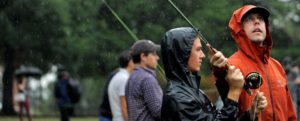
“I just imagined my students out on Jefferson Square, that was always the vision,” said Pineda, who invited two fishing experts from Orvis sporting goods store to teach students in his Ecoliterature class how to fly fish. “We can talk all day long about fly fishing, but there’s something about actually holding the rod.”
In a two-part lesson, the Orvis fishermen, Mark Fackner and Aaron Spicer, instructed the students about fly patterns and the ecology of the river. Then, the novice student fishermen got to experience casting a fishing rod for themselves.
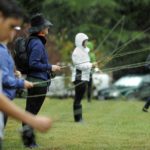
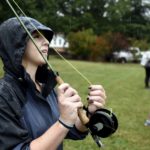
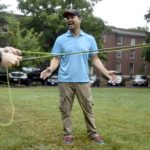
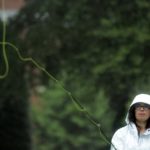
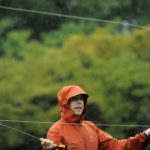
Fackner and Spicer taught the class two casts: false casting and the pick up and lay down. While some students got the hang of it immediately, many first timers struggled with technique. Quick to sense their frustration, Pineda—an avid fisherman himself–jumped in to help.
“I’ve fished in so many conditions,” said Pineda. “This is what it’s all about.”
This 300-level literature course with a focus on nature and the environment was a dream class for Pineda. He hoped to provide his students with some hands-on experience to help them connect with their writing.
“Writers use their imagination when constructing narratives, of course, but having firsthand knowledge of the thing they’re describing often gives them a relevant starting point and can also help create additional opportunities for the scope of the piece,” said Pineda, an acclaimed writer and poet, who is a finalist for the 2016 Library of Virginia Literary Award. “Writers can choose specific, essential details that build more authentic imagery, which often lends greater credibility to the voice of the narrative.”
That’s just what happened while writing his novel Apology. At the time, he also worked for a telecommunications company where he had to learn to climb 35-foot telephone poles.
“I decided my protagonist would go through similar training, and so I wrote those parts into the story,” said Pineda, about the book that won the 2013 Milkweed National Fiction Prize.
First-timer sophomore Sally Marrazzo could relate as she cast her line high into the air. “I think this experience will benefit my writing in this class,” she said. “Even though we are all novices it’s given us a better understanding.”
That’s just what Pineda wanted to hear. He’s loves to learn new things and hopes to spark the same curiosity within his writing students.
“The reason I teach is because I want students to find their voice and find their way,” said Pineda, recipient of the University’s 2016 outstanding young faculty member award. “I’m simply helping them find who they’ve always been.”
Picture Perfect
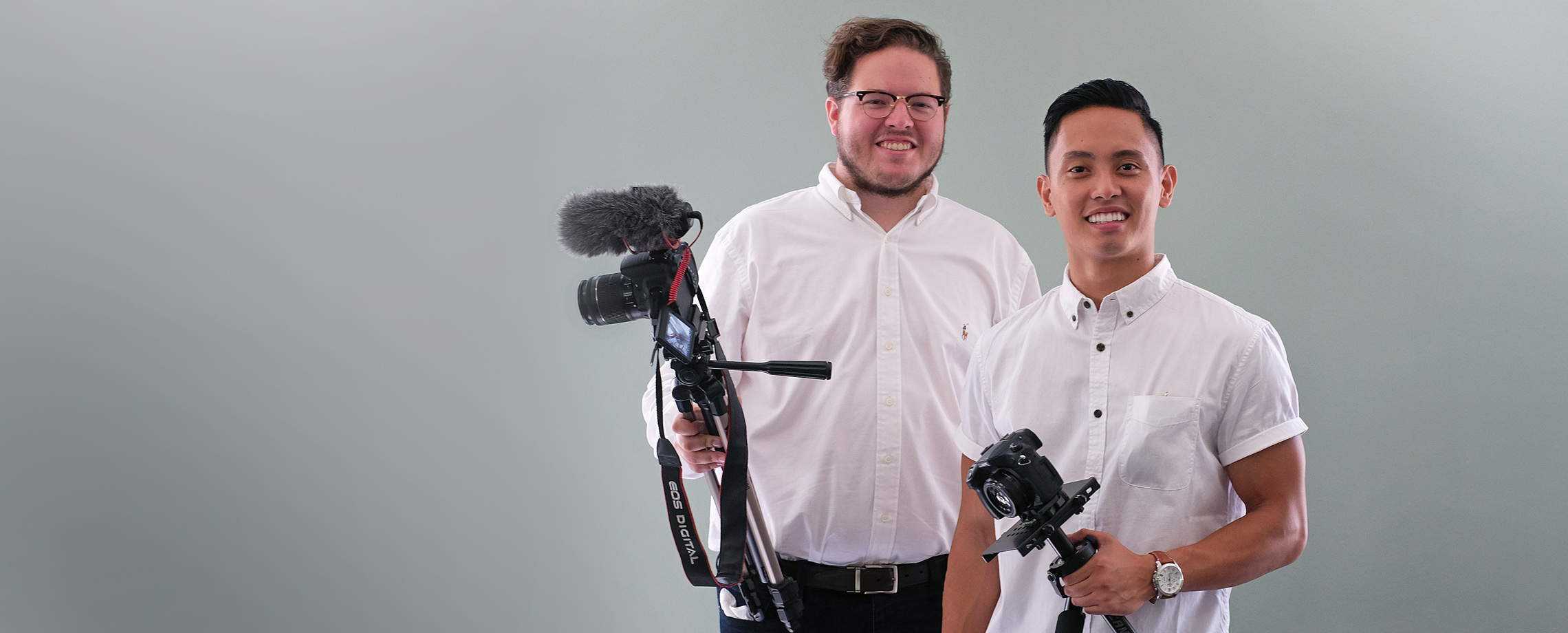
Pressing ‘record’ on his video camera, Nico Noel De Ocampo pushes off the pavement and propels his longboard forward. Gliding down Campus Walk, his lens captures students walking by the benches and foliage lining the historic brick pathway.
Along with fellow UMW graduate Mason Carlton, De Ocampo is on assignment to document the sense of community at the university they called “home” for four years.
Two months, eight interviews and 25 hours of footage later, the business majors-turned-business partners produced UMW’s first official video for incoming students. The newly minted alumni found the assignment the perfect launching pad for a career—as co-owners of the videography company known as Fishtank Media.
Looking back, fate seemed to intervene when Carlton and De Ocampo were partnered in Assistant Professor Kashef Majid’s marketing course. Assigned to create a marketing video for UMW’s graduate programs, the business majors didn’t realize the project would eventually spark a business.
“Professor Majid gave us a project that helped us find something that we love,” said Carlton. The course turned their hobby into a passion. Afterward, Carlton interned with UMW’s University Relations team, creating branded videos for the Great Minds campaign; De Ocampo worked with UMW Athletics, creating a “You Can Play” video that broke social engagement records for the department.
Then they got a phone call that would give them a chance to hone their business savvy and videography skills in a big way.
Student Affairs Vice President Juliette Landphair contacted the duo about the possibility of creating a video for new students. “I was walking out of the classroom where I had just learned about negotiation and into an office where I could apply those skills first-hand,” said De Ocampo.
The videographers rolled up their sleeves and got to work – interviewing students, alumni and staff to capture the stories that defined the UMW experience they were just wrapping up.
“These aren’t just the faces of UMW marketing, it’s all real,” said De Ocampo, explaining how he personally knew each of the people interviewed in the video. “I played rugby with Connor, I go to the gym with Christian and I see Haley at the library.”
The compelling and emotionally charged video that resulted was viewed by hundreds of freshmen and transfer students as they arrived on campus in August.
“Relationships have been a core part of the Mary Washington experience,” said Landphair. “And Mason and Nico were really able to capture the power of those relationships having just been through the UMW experience themselves.”
It was a moment that sealed the UMW experience for the new alumni.
“UMW prepared us to venture out and do something we’re passionate about,” said Carlton. “We feel lucky and blessed to have found something we love to do.”
“Welcome Home” video produced for UMW by Fishtank Media 2016.
Front-Row Seat
UMW sophomore Mackenzie Hard’s iPhone slices into her sleep.
4:30 a.m.: “Good morning, crazy kid!”
She stirs at the first pre-programmed message, settles back in under the extra-long quilt her grandmother made for her 6-foot-2 frame.
4:45 a.m.: “If you don’t get up now, you won’t see the sun rise!”
She opens an eye, feels her FOMO kick in. But her Eagle Village room is … so … comfy.
5 A.M: “Okay, now you’ll really be late, way to go.”
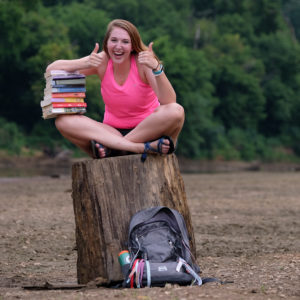
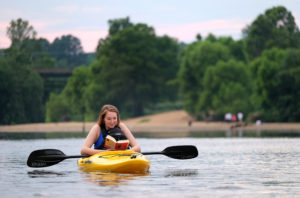
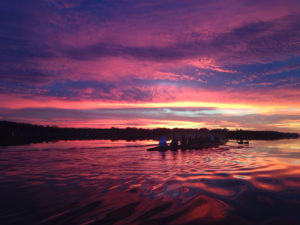
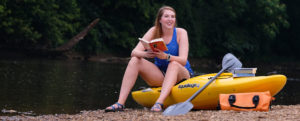
The tone serves its purpose. She’s up. In a race with the sun. Off to meet crewmates at Alvey parking garage at 5:30, be out on the water by 6.
Growing up in Colonial Williamsburg and on Jamestown Island, Hard was as absorbed in water as she was in history. UMW would revive her passion for both. Now a crew member and English major pursuing a master’s degree in education, she hopes to teach high school, helping steer students toward their own college adventures.
“It was such a tough and busy time of my life,” Hard said of that 12th-grade transition. “I want to be able to tell them, ‘I know what you’re going through. I know it’s hard. You’ll get through it. Let me help you.’ ”
When she wasn’t playing the snare in the Colonial Williamsburg Fifes and Drums Corps or learning open-hearth cooking as a young volunteer, she’d spend long summer days on the James River. Then the air would turn crisp, and she’d go with her mother, a teacher, to help prep her second-grade classroom. Hard would play with the old-fashioned projector and sometimes, just sometimes, pretend to be a teacher, herself.
In high school, instructors she touts as “flawless” inspired her further, fueling her love of English. A fan of Harry Potter and The Hunger Games, Hard played basketball and edited the yearbook before turning her thoughts to college. The first time she saw “UMW” on a T-shirt, she Googled it. She liked what she saw and scheduled not one but five visits to campus.
“I love our community. I love that we’re small,” she said during an interview at the Hurley Convergence Center. “I love that I have friends who walk in here and I can wave at them while we’re doing this.”
She was just meeting some of those friends when she showed up at that first Club Carnival freshman year, set to play basketball. Instead, she was coaxed into crew, where she found an unexpected camaraderie.
“The rowers tend to develop some pretty close relationships,” said Rich Adams, who coaches the team. “It requires a lot of discipline. The people that are not so tough very quickly decide it’s not the sport for them.”
But Hard has a soft side, as well. She cried last December to miss Williamsburg’s Grand Illumination, watching it live-streamed, instead, while she studied for finals. But her on-campus commitments leave little time to be homesick. She’s a resident assistant and Washington Guide who’s involved with Best Buddies. And, of course, there’s crew.
“The power and muscle and strength of eight girls in a boat?” she said. “It blows me away.”
Ready for Rio
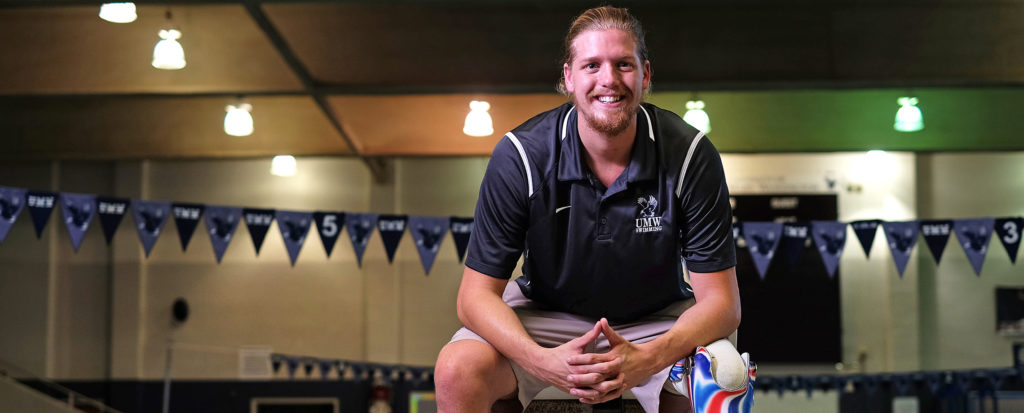
Beaming in a photo in front of Big Ben, Dalton Herendeen couldn’t have known he’d leave London, and the 2012 Paralympic Games, without gold, silver, or bronze. Or that he would have a second shot next week in Rio de Janeiro, Brazil.
“I will have a chance to medal,” said Herendeen, UMW’s assistant swim coach. “That’s the thing that drives me the most now.”
Born with a blood clot that caused the loss of his lower left leg, Herendeen plunged into sports anyway, finding his niche in the pool. A record-breaking opponent to able-bodied swimmers, he would question his fit in the Paralympics. But in the long line of coaches he’d learn from, one would push him to try. Another would make sure he got there again.
“A medal would be amazing,” said Eagles head swim coach Abby Brethauer, who hired Herendeen and spent the past year training him for Rio. “I just want him to be happy with the way this journey ends.”
But first, the beginning.
Growing up in the Midwest, Herendeen tackled a series of clunky prosthetics but played the same sports as his siblings – basketball, football, and soccer. In the water, he excelled. Despite his disability, he’d made the state finals in high school and earned a scholarship to the University of Indiana. So when his coach suggested he look into the Paralympics, Herendeen balked. Competing against handicapped swimmers seemed like a step backward.
But he came around.
“I thought I was going to destroy these kids,” said Herendeen, who was disarmed by the wheelchairs and prosthetics that scattered the deck at that first 2008 meet. “But they were phenomenal. I got my butt kicked.”
He licked his wounds and set his sights on 2012. For the next four years, he would eat, sleep, and breathe swimming, and it paid off. But despite his sturdy performance in London, there would be no medals to bring home.
Distraught, Herendeen no longer wanted to look at a pool much less swim in one. That’s when he got a call from the folks at Bates College Swim Camp, which UMW’s Brethauer co-founded. They had seen a feature on him in the NCAA magazine Champion and asked him to join their coaching team.
Working with kids turned things around, pumped Herendeen up, and pulled him back to the pool. Back at U-Indy, he broke lots of records and became captain of the school’s Division II team. When he graduated, Brethauer asked him to coach at Mary Washington and promised to train him for Rio.
Then, at last year’s world championships in Scotland, something went wrong. Herendeen blew out his right knee, the good one, and had to have surgery. With Brethauer’s encouragement, he pressed through the pain of recovery and continued to train.
The two would spend hours each day in the Goolrick Hall pool or in the long-course lanes at the Jeff Rouse Family Swim and Sport Center, where Herendeen coaches the Fredericksburg Stingrays. Together, they’d focus on the technique and strategy he would need in Brazil, where he’s slated to compete in the 400-meter freestyle, 200-meter individual medley, 100-meter butterfly, 100-meter breaststroke and 400-meter medley relay.
Four years ago, at the Paralympic Games in London, Herendeen said, he was star struck. Just getting there was enough, and he soaked it all in. This time around he wants more.
“I’ve accomplished everything I want to in my career; the only thing I have not done is to medal,” he said. “Whether I do or I don’t, what I want to be able to do … is say, ‘Dalton, you gave it everything you had.’ “
The 2016 Paralympic Games run Sept. 7 to 18. Find the schedule online at https://www.rio2016.com/en/paralympics/schedule-and-results.
Ready for Rio
Beaming in a photo in front of Big Ben, Dalton Herendeen couldn’t have known he’d leave London, and the 2012 Paralympic Games, without gold, silver, or bronze. Or that he would have a second shot next week in Rio de Janeiro, Brazil.
“I will have a chance to medal,” said Herendeen, UMW’s assistant swim coach. “That’s the thing that drives me the most now.”
Born with a blood clot that caused the loss of his lower left leg, Herendeen plunged into sports anyway, finding his niche in the pool. A record-breaking opponent to able-bodied swimmers, he would question his fit in the Paralympics. But in the long line of coaches he’d learn from, one would push him to try. Another would make sure he got there again.
“A medal would be amazing,” said Eagles head swim coach Abby Brethauer, who hired Herendeen and spent the past year training him for Rio. “I just want him to be happy with the way this journey ends.”
But first, the beginning.
Growing up in the Midwest, Herendeen tackled a series of clunky prosthetics but played the same sports as his siblings – basketball, football, and soccer. In the water, he excelled. Despite his disability, he’d made the state finals in high school and earned a scholarship to the University of Indiana. So when his coach suggested he look into the Paralympics, Herendeen balked. Competing against handicapped swimmers seemed like a step backward.
But he came around.
“I thought I was going to destroy these kids,” said Herendeen, who was disarmed by the wheelchairs and prosthetics that scattered the deck at that first 2008 meet. “But they were phenomenal. I got my butt kicked.”
He licked his wounds and set his sights on 2012. For the next four years, he would eat, sleep, and breathe swimming, and it paid off. But despite his sturdy performance in London, there would be no medals to bring home.
Distraught, Herendeen no longer wanted to look at a pool much less swim in one. That’s when he got a call from the folks at Bates College Swim Camp, which UMW’s Brethauer co-founded. They had seen a feature on him in the NCAA magazine Champion and asked him to join their coaching team.
Working with kids turned things around, pumped Herendeen up, and pulled him back to the pool. Back at U-Indy, he broke lots of records and became captain of the school’s Division II team. When he graduated, Brethauer asked him to coach at Mary Washington and promised to train him for Rio.
Then, at last year’s world championships in Scotland, something went wrong. Herendeen blew out his right knee, the good one, and had to have surgery. With Brethauer’s encouragement, he pressed through the pain of recovery and continued to train.
The two would spend hours each day in the Goolrick Hall pool or in the long-course lanes at the Jeff Rouse Family Swim and Sport Center, where Herendeen coaches the Fredericksburg Stingrays. Together, they’d focus on the technique and strategy he would need in Brazil, where he’s slated to compete in the 400-meter freestyle, 200-meter individual medley, 100-meter butterfly, 100-meter breaststroke and 400-meter medley relay.
Four years ago, at the Paralympic Games in London, Herendeen said, he was star struck. Just getting there was enough, and he soaked it all in. This time around he wants more.
“I’ve accomplished everything I want to in my career; the only thing I have not done is to medal,” he said. “Whether I do or I don’t, what I want to be able to do … is say, ‘Dalton, you gave it everything you had.’ “
The 2016 Paralympic Games run Sept. 7 to 18. Find the schedule online at https://www.rio2016.com/en/paralympics/schedule-and-results.
World-Ready
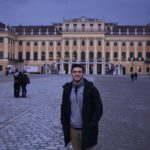
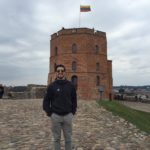
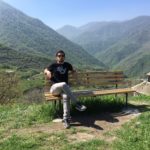
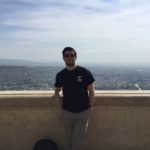
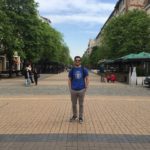
Alex Clegg is just as comfortable sitting on the lawn next to the Eiffel Tower as he is lounging in an Adirondack chair on Ball Circle. For the incoming senior, the college experience isn’t just about collecting academic credits – it’s about crafting a global education.
With 34 countries on his passport to date, the jet-setting senior returns to UMW this fall after checking off a semester in the Czech Republic and an internship and two-week game design course in Wales. And while overseas, Clegg won election as UMW Student Government Association president and landed a position on Finland’s National Men’s rugby team.
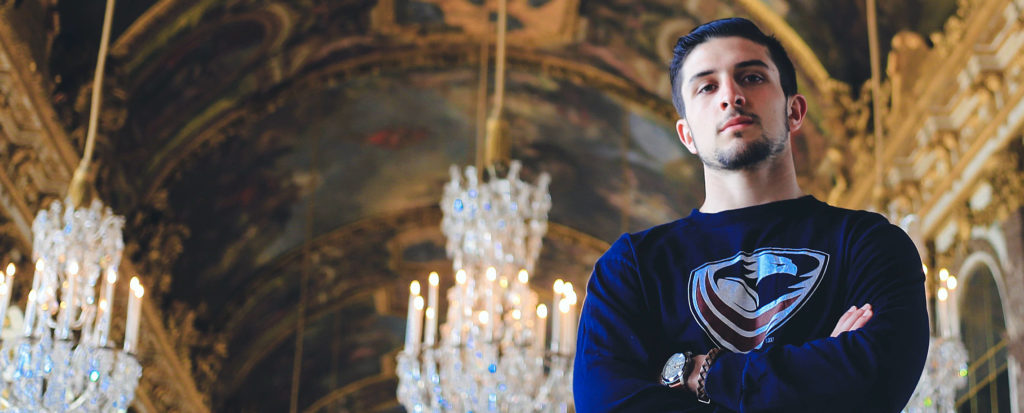
“I grew up traveling,” said Clegg, who took his first trip to Europe before he was in high school. “My grandfather lives in Mexico so growing up, I was used to spending months at a time out of the country.”
It’s a lifestyle he’s applied to his college curriculum. The digital communications major flew to Europe last February to begin a semester at the CESP University of Economics in Prague, living in an apartment with American students outside the city center where he attended classes.
From Prague, Clegg traveled to Bangor University in Wales where he interned with the school’s International Education Center. Having worked as a peer advisor with UMW’s Center for International Education for two years, the internship gave him the chance to see the study abroad experience from the ‘other end.’ During his final two weeks abroad, he designed a video game as part of a Castle Quests course with six other students from UMW.
“Studying abroad widened my view of how daily life is lived all across the world,” said Clegg, who is originally from Arlington, Va. “I think each culture has something we can learn from.”
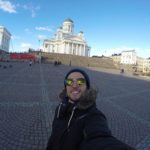
Between semesters, Clegg traveled extensively throughout Europe. Perhaps the most significant trip was his visit to Finland, where he tried out for and made the country’s National Men’s rugby team.
“My grandmother was Finnish so I was eligible for the team,” said Clegg, who has played club rugby for UMW for three years. “My first game, we led Finland to the country’s first-ever victory over Bulgaria.”
Now back in the U.S., Clegg is settling into his final year on the Fredericksburg campus, where he will wrap up his digital communications major and serve as SGA president.
“I’m going to build a two-way street between students and UMW’s administration,” said Clegg, who attended a leadership conference in August to prepare for his position. “I’m here to advocate for students and be a liaison between them and the administration.”
His global experience isn’t over yet though – this fall, he’s headed back to Finland for his next national rugby game.
“This is just the beginning,” said Clegg. “I plan to visit more than 100 countries in my lifetime.”