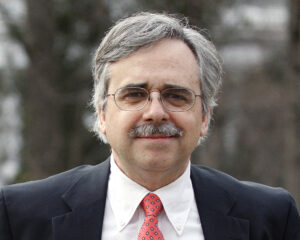
Stephen Farnsworth, professor of political science and director of UMW’s Center for Leadership and Media Studies
Stephen Farnsworth, professor of political science and director of the University’s Center for Leadership and Media Studies, recently delivered an online lecture, “The Political Advantages – and Civic Dangers – of Disinformation,” to the Sorensen High School Leaders Program of the University of Virginia. The talk drew from Dr. Farnsworth’s current book project on disinformation.
Dr. Farnsworth also appeared in the following news stories:
‘It’s a Moral Issue’: Virginia Families Need Affordable Child Care and Paid Leave (Virginia Dogwood)


“This book examines how a group of U.S. Millennial friends in their late twenties embed both old media (books, songs, films, TV shows) and new media (YouTube videos, video games, and internet memes) in their everyday talk for particular interactional purposes. Multiple case studies are presented featuring the recorded talk of Millennial friends to demonstrate how and why these speakers make media references in their conversations. These recorded conversations are supplemented with participant playback interviews, along with ethnographic field notes. The analysis demonstrates how the speakers phonetically signal media references in the speech stream, how they demonstrate appreciation of the references in their listening behaviors, and how they ultimately use media references for epistemic, framing, and identity construction purposes, often (but not always) when faced with epistemic, or knowledge, imbalances as well as interactional dilemmas, or awkward moments in interaction. The analysis shows how such references contribute to epistemic management and frame shifts in conversation, which is ultimately conducive to different forms of Millennial identity construction. Additionally, this book explores the stereotypes embedded in the media that these Millennials quote, and examines the effects of reproducing those stereotypes in everyday social life. This book explores how the boundaries between screens, online and offline life, language, and identity are porous for Millennials, and weaves together the most current linguistic theories regarding knowledge, framing, and identity work in everyday interaction, illuminating the interplay between these processes.”
On June 30, College of Business Senior Lecturer Kimberley Kinsley and Professor of Economics Robert Rycroft will have a book published, Inequality in America: Causes and Consequences, Santa Barbara, CA:ABC-CLIO.