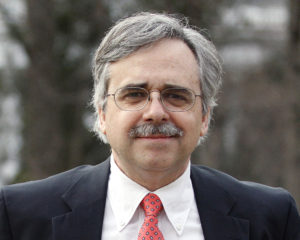
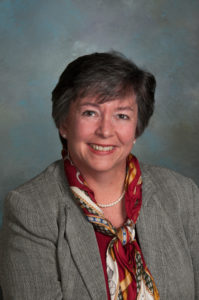
Two professors and one recent alumnus of the Department of English, Linguistics, and Communication presented at the Modern Language Association Conference that met Jan. 3 through 6 in Boston, Mass. Assistant Professor Zach Whalen presented the paper “OCR (Optical Character Recognition) and the Vestigial Aesthetics of Machine Vision” on the panel Reading the Invisible and Unwanted in Old and New Media. Associate Professor Gary Richards presented the paper “Tennessee Williams and the Burden of Southern Sexuality Studies” on the panel The South and Sexuality. Alumnus Tyler Babbie, ’08, presented the paper “Another Term: Richard Aldington and Imagism(e)” on the panel From Imagism to “Amygism” to Vorticism.
James Goehring Publishes Book
Professor of Classics, Philosophy and Religion James E. Goehring’s book “Politics, Monasticism, and Miracles in Sixth Century Upper Egypt: A Critical Edition and Translation of the Coptic Texts on Abraham of Farshut” has been published.
This volume contains a critical edition and translation of the Coptic texts on Abraham of Farshut, the last Coptic orthodox archimandrite of the Pachomian federation in Upper Egypt. While past studies have focused on the origins and early years of this, the first communal monastic movement, Goehring turns to its final days and ultimate demise in the sixth century reign of the Byzantine Emperor Justinian I. He examines the literary nature of the texts, their role in the making of a saint, and the historical events that they reveal. Miracle stories and tendentious accounts give way to the reconstruction of internal debates over the decrees of the Council of Chalcedon, political intrigue, and the eventual reordering of the communal monastic movement in Upper Egypt.
2012. XIV, 160 Seiten (Studien und Texte zu Antike und Christentum 69). ISBN 978-3-16-152214-7 fadengeheftete Broschur € 49,– eBook erscheint im Dezember
Nabil Al-Tikriti Presents at Istanbul History Symposium
On Thursday, Dec. 20, Nabil Al-Tikriti delivered a presentation in Turkish entitled “II Bayezid Oğulları Arasındaki Taht Kavgası / The Fight Between the Sons of Bayezid II for the Throne” to the “Symposium of the Sultan Beyazit II” in Istanbul, Turkey. The symposium was sponsored by Kültür Kenti Vakfı (Cultural City Foundation), Beyoğlu Municipality, Galatasaray University, and Mimar Sinan University. The symposium program included several prominent Ottoman historians.
In the course of this presentation, Prof. Al-Tikriti engaged with current debates about Ottoman family values by pointing out that Bayezid II’s extended family members carried out nearly a dozen murders of other family members between 1481 and 1522.
The conference program can be accessed here.
Andrea Livi Smith Publishes Article in Journal
Andréa Livi Smith, assistant professor and director of the Center for Historic Preservation, published her article entitled “The Young Preservationist: Findings from the First Undergraduate Historic Preservation Education Symposium” in the peer-reviewed journal Preservation Education & Research. PER is the scholarly journal of the National Council for Preservation Education.
The article is derived from the first Undergraduate Historic Preservation Education Symposium, organized by Dr. Smith and hosted by UMW in June 2010. Dr. Smith is currently organizing the second iteration of the symposium, to be held this summer.
John Broome to Present at AERA Annual Meeting
John P. Bro
ome, assistant professor in curriculum & instruction and director of secondary education and preK-12 education in the College of Education, will be presenting his paper, “Approaching The Civic Mission of Schools: Examining Civic Engagement in an Alternative Learning Environment” at the American Educational Research Association’s annual meeting in San Francisco, California in April 2013.
The American Educational Research Association is the most prominent international professional organization, with the primary goal of advancing educational research and its practical application. Its more than 25,000 members are educators; administrators; directors of research; persons working with testing or evaluation in federal, state and local agencies; counselors; evaluators; graduate students; and behavioral scientists. The broad range of disciplines represented by the membership includes education, psychology, statistics, sociology, history, economics, philosophy, anthropology, and political science.
Hall Cheshire Named Acting CIO
I am pleased to announce that Hall Cheshire has been named Acting Chief Information Officer (CIO) for the University of Mary Washington effective immediately. Hall has agreed to lead the Department of Information Technology during the interim period while a search for a permanent CIO is carried out. The search for a permanent CIO will take place during the first few months of 2013 and we expect to have someone in place by June 30, 2013.
Hall is a very experienced IT professional who also carries the title of Executive Director, Enterprise Information Services at UMW. He has served UMW since 2009. His willingness to accept these additional duties and responsibilities is appreciated by all of us.
— Richard R. Pearce, Vice President for Administration and Finance and CFO
Christopher Kilmartin Delivered Commencement Address at VCU
Professor of Psychology Christopher Kilmartin spoke to an audience of more than 1,300 as the keynote speaker at Virginia Commonwealth University’s Department of Psychology diploma ceremony on Saturday, Dec. 8. The ceremony honored psychology graduates from August through December.
In his speech, Kilmartin encouraged graduates to embrace the uncertainties of the future, while remaining confident in their abilities.
“Create the voice that says, ‘I hope this is the worst thing that ever happens to you.’ Learn from your disappointments, but learn that you can survive them,” he said.
Kilmartin received a master’s and a doctorate in counseling psychology from VCU.
English Faculty Publish Work, Receive Accolades
Assistant Professor of English Colin Rafferty’s essay “Reflections from Virginia: Signifying a Hospital” appeared in the Used Furniture Review as part of the literary magazine’s post-election coverage. Rafferty’s essay “Albums of Our Lives: Bruce Springsteen’s ‘Darkness on the Edge of Town’” appeared in The Rumpus. His short story, “Wake Up, Doctor West: An Essayistic Exploration of a Possible Alternate History of Kanye West and African-American Musicology (in Three Acts),” is forthcoming in the anthology “#GOODLitSwerveAutumn: An Anthology of Independent Literature about Kanye West,” published by NAP Literary Magazine.
Professor of English and Creative Writing Coordinator Warren Rochelle’s story “The Boy on McGee Street” was recently published in Queer Fish, Volume 2 (Pink Narcissus Press).
Visiting Assistant Professor of English Elizabeth Wade’s poem, “Selling the Saddle,” which was originally published in Cave Wall, has been nominated for a Pushcart Prize.
Arrington Distinguished Chair Claudia Emerson’s book, “The Opposite House,” has been accepted for publication by LSU Press.
Writing Center Assistant Amanda Rutstein’s poem “Chasing the Hawk,” will be published in fall 2012 issue of The Greensboro Review.
Stephen Farnsworth Presents Research Paper
Stephen Farnsworth, professor of political science and director of the university’s Center for Leadership and Media Studies, delivered a co-authored research paper, “An Extended Presidential Honeymoon? Coverage of Barack Obama in The New York Times During 2009 and 2010,” at this year’s meeting of the Northeastern Political Science Association in Boston.
John Broome’s Teaching Spotlighted by National Association
John P. Broome, assistant professor in curriculum & instruction and director of secondary education and preK-12 education in the College of Education, was spotlighted in the latest edition of Keying In, a publication of the National Business Education Association (NBEA). This publication showcased how and why professors from around the country used the “flipped classroom” (or reverse teaching) model in their instruction.
For Broome, the answer was more than incorporating engaging technology. It was to address his enabling of students to not complete their course readings. In his opinion, the more educators summarize readings (instead of clarify), fewer students read and more fake and “do college.”
Excerpt from the article:
“John Broome flipped his classroom to solve a problem. But Broome’s issue was ideology, not logistics—class time was consumed with summarizing course readings. This left little time for content application, but more importantly, few opportunities for guiding students’ critical thinking abilities. He felt his courses were missing their potential.
‘Those who do the work do the learning. Summarizing content for them takes the thinking away from them,’ he says. ‘Too many educators might be enabling this.’
Broome compiled a list of resources students could use to prep for class: readings and videos from education associations, professional learning communities, and other universities. Before class, students took online quizzes to assess what they’d learned.
Class time was freed up for applying new knowledge while Broome provided guidance, initiated reflective discussions, and aided students. The less he talked, the more he got to know his students and the more he was able to provide personalized instruction and feedback. ‘My students were very receptive to more individual attention and help with activities,’ he says. ‘It made my classes more personable and productive.’
And because Broome refused to enable students, they began taking more responsibility for content and more risks with it, in a safe learning environment.
‘Not all students learn best at the same time. [By flipping the classroom] learning new content isn’t constrained to an artificial class time,’ he says. ‘Students can approach learning when their brains are available to process new information. It provides them with ownership of learning when [the time] is best for them.’
This year Broome received a grant from his university to begin making his own videos and other digital resources. ‘This takes a lot of time and dedication,’ he says, ‘but this way my students get the most out of my courses.’”
Dr. Broome is currently in the second UMW Online Learning Initiative cohort and learning new software and skills to continue to “flip” his education courses.