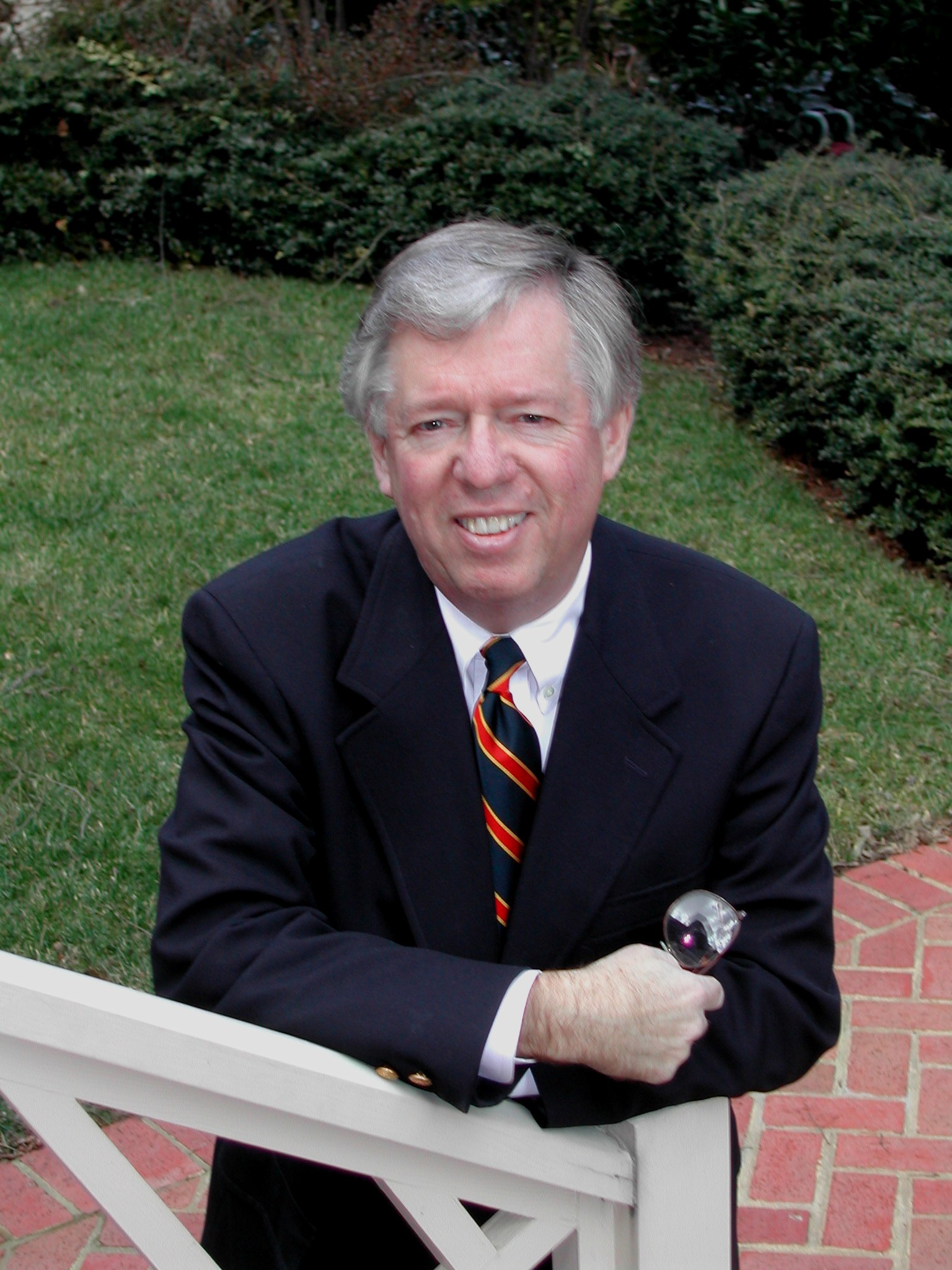
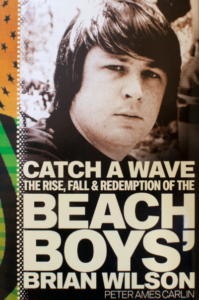
 The 17th season of the William B. Crawley Great Lives Lecture Series continues this evening, Feb. 6, with a look at the quintessential American band, The Beach Boys, as well as the artistic genius and downward spiral of its leader, Brian Wilson. Biographer Peter Ames Carlin will talk about his book, Catch a Wave: The Rise, Fall & Redemption of The Beach Boys’ Brian Wilson. This series is open to the public free of charge and no admission tickets are required. Programs begin at 7:30 p.m. in Dodd Auditorium in George Washington Hall. Each lecture concludes with an audience Q&A session with the speaker and a book-signing. The Davenport & Company Lecture.
This is the story of The Beach Boys in the context of American history and the two sets of ideals, faith and money, that have defined our society since the Pilgrims sailed the ocean blue. In both music and the five Beach Boys, brothers Brian, Dennis and Carl Wilson, their first cousin Mike Love and neighbor Al Jardine, presented a dreamy vision of California as Eden: a place filled with, sun, surf and beautiful girls. The group turned towards art music in the mid-sixties, but Brian Wilson, the group’s resident genius, was as troubled as he was brilliant, and as his visions became more avant-garde the group turned away, choosing to become a perpetual motion nostalgia machine that continues to fill casino showrooms and state fair venues across the country. And so here we are again: Art vs. commerce, faith vs. finance. The fact that the legendarily lost (for nearly 40 years) Smile album, a psychedelic masterpiece Brian recorded in 1966 only to lose his way and vanish for the better part of the next thirty years, was about Manifest Destiny’s impact on the nation, tells us something. In both their beauty and their ugliness the Beach Boys are truly the most truly American band that has ever existed.
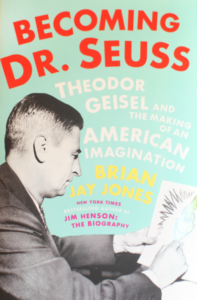 The Great Lives series will continue on Tuesday, Feb. 11, with Becoming Dr. Seuss: Theodor Geisel and the Making of an American Imagination, by Brian Jay Jones, The New York Times bestselling author of Jim Henson: The Biography. The JON Properties/Van Zandt Restorations Lecture.
With more than 600 million copies of his books sold worldwide, few names are as recognizable and beloved as “Dr. Seuss.” And yet, the man behind the pseudonym, Theodor Seuss Geisel, was more nuanced than his outsized legacy – and his journey to American icon was never preordained. In his early days as a magazine cartoonist in Prohibition-era New York and a successful career in advertising, and his later work as a progressive editorial cartoonist and dreams of a career as a Hollywood screenwriter, Geisel produced children’s books only sporadically, and not always successfully. Jones explores the artistic and intellectual trajectory that convinced Geisel that children’s books were “a good profession,” and that children deserved to be taken seriously as readers – a long and creative journey that transformed Theodor Geisel into Dr. Seuss.
Great Lives continues on Tuesday, Feb. 18 with Stephen Hawking, by Kitty Ferguson.
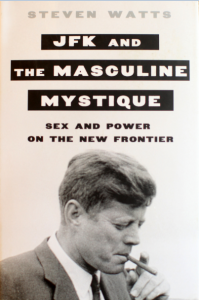 The 17th season of the William B. Crawley Great Lives Lecture Series continues this evening, Jan. 30, with a look at the handsome, young president who was the epitome of masculinity in the early 1960s and the debonair spy who captivated fiction readers and filmgoers, including JFK himself. This series is open to the public free of charge and no admission tickets are required. Programs begin at 7:30 p.m. in Dodd Auditorium in George Washington Hall. Each lecture concludes with an audience Q&A session with the speaker and a book-signing. The John and Linda Coker Lecture.
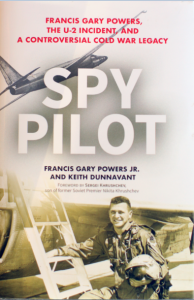 One of the most widely discussed and controversial events of the Cold War was the downing of the American U-2 spy plane piloted by Francis Gary Powers over the Soviet Union on May 1, 1960. The event was recently depicted in the Steven Spielberg movie Bridge of Spies. Powers was captured by the KGB, subjected to a televised show trial, and imprisoned, all of which created an international incident. Soviet authorities eventually released him in exchange for captured Soviet spy Rudolf Abel. On his return to the United States, Powers was exonerated of any wrongdoing while imprisoned in Russia, yet a cloud of controversy lingered until his untimely death in 1977.
 In their 2018 New York Times bestselling biography Tiger Woods, authors Jeff Benedict and Armen Keteyian wrote that “in 2009, Tiger Woods was the most famous athlete on the planet, a transcendental star of almost unfathomable fame and fortune, living what appeared to be the perfect life. Married to a Swedish beauty and the father of two young children, he was the winner of fourteen major golf championships and earning more than 100 million dollars annually. But it was all a carefully crafted illusion. As it turned out, Woods had been living a double life for years – one that unraveled in the aftermath of a Thanksgiving night car crash that exposed his serial infidelity and sent his personal and professional lives over a cliff.”
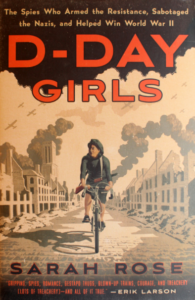 In 1942, the Allies were losing, Germany seemed unstoppable, and every able man in England was fighting. Churchill believed Britain was locked in an existential battle and created a secret agency, the Special Operations Executive (SOE), whose spies were trained in everything from demolition to sharp-shooting. Their job, he declared, was “to set Europe ablaze!” But with most men on the frontlines, the SOE did something unprecedented: it recruited women. Thirty-nine women answered the call, leaving their lives and families to become saboteurs in France. Half were caught, and a third did not make it home alive.
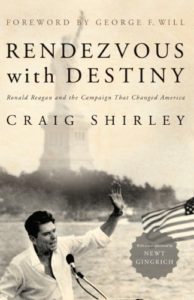 The 17th season of the William B. Crawley Great Lives Lecture Series kicks off on Tuesday, Jan. 21, with a look at Ronald Reagan. Craig Shirley, author of “Rendezvous with Destiny: Reagan and the Campaign that Changed America,” will provide unique insight into the life of the 40th president and one of the most consequential figures of the 20th century. The Virginia Partners Bank Lecture.