Category: What’s New @ UMW

Successful UMW/MWHC Outreach Event

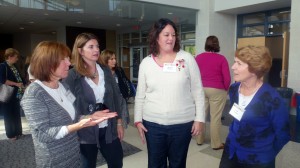
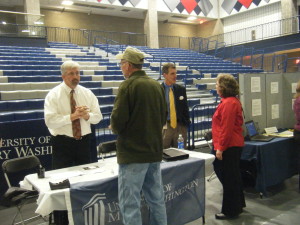
The University of Mary Washington (UMW), in collaboration with Mary Washington Healthcare (MWHC) and the City of Fredericksburg, hosted a ‘How to do Business’ seminar on Tuesday, October 16, 2012 in the Anderson Center.  The seminar was attended by approximate 170 vendors and business partners and focused on providing interested businesses with the tools and resources needed to gain contracts with UMW and MWHC.

The event participants included representatives from the UMW Small Business Development Center (SBDC), Virginia e-Procurement (eVA), the Department of Minority Business Enterprise (DMBE) and the Virginia Department of Business Assistance (VDBA).  After presentations from Alan Edwards – MWHC VP for Supply Chain Solutions, Erma Baker – UMW Assistant VP for Business Services & CPO and Gary Hobson – UMW Capital Outlay Director, attendees were allowed to ask questions of representatives from each division in a breakout session.  Additionally, the SBDC assisted any vendor who was interested in starting their application to be eVA or DMBE registered. 

The ‘How to do Business’ seminar is the first collaborative outreach event of the current fiscal year and the UMW Procurement Services department plans to continue outreach to the community and available small local vendors.    

Free Lance-Star Article: http://news.fredericksburg.com/newsdesk/2012/10/16/umw-hospital-groom-partners/ 

UMW Procurement Services
(540) 654-1127
http://adminfinance.umw.edu/purchasing/
Last Faculty/Staff Tennis Clinic, 10/29

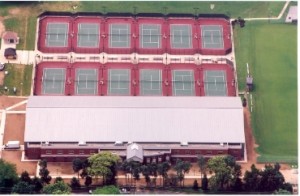
The last free faculty and staff tennis clinic will be held Monday, Oct. 29 from 3:30 to 5 p.m. at the outdoor tennis courts.

The men’s and women’s coaches and players will work with all levels of experience and abilities.

Registration is required so the tennis coaches can notify you of any changes or cancellations due to weather, and to send reminders the day before the clinic.

To sign up or to be  on our mailing list for future faculty and staff offerings at the tennis center, email Todd Helbling at thelblin@umw.edu.

President Hurley on UMW’s CVC 2012

By now, most faculty and staff are aware that UMW has started its Commonwealth of Virginia Campaign for 2012. Hopefully you were able to stop by and visit with some of the non-profits that were in the Red Room immediately following the employee luncheon on Tuesday, October 16. One of the non-profits on hand that day was the Fredericksburg Area Food Bank. Coincidentally, an article appeared in The Free-Lance Star that same morning, with the headline “Area food pantries trying to meet growing demand”. Here is an excerpt from that article:

“So far this year, 20,000 people in the area received services through the food bank partner agencies and programs each month, Oliver said.

That is 5,000 more individuals than last year. The food bank distributed nearly 3.6 million pounds of food so far in 2012.”

Consider this, from the Fredericksburg Area Food Bank’s web site:  “For every $10 donated, we are able to provide 30 meals to hungry children and families.”  While we are all aware of the tough economy and the increasing costs of daily living, some of us have definitely been hit harder than others.  That is why I’m asking you to please consider participating in CVC this year.  The Fredericksburg Area Food Bank is just one example of the over 1200 non-profits listed in the CVC 2012 Directory.  Be sure to look at the directory, either on the CVC web site or by requesting a paper copy from one of the UMW CVC Ambassadors.  And remember, if you have recently participated in a fund raising event or have already given to a listed non-profit (any time between March 1 and December 30, 2012), you qualify as a CVC participant.  Please contact Lori Izykowski at lizykows@umw.edu with any questions related to this year’s campaign.

Third Annual Symposium Draws 200 Literacy Leaders

The third annual Literacy Leaders Symposium, hosted by the University of Mary Washington College of Education in partnership with Stafford County Public Schools, brought together more than 200 literacy leaders from across the region on Wednesday, Oct. 17. Bill Brozo, professor of literacy at George Mason University, was the keynote speaker.

More than 200 literacy leaders from across the region came together Oct. 17 for the third annual event.

“A boy’s love of reading doesn’t begin with scholarship…it begins with discovery,” said Brozo, who first discovered his own love of reading as a child when he broke his arm playing baseball. The professor spoke about closing the literacy achievement gap for boys and described techniques that could be implemented by literacy leaders.

The author of numerous articles and books on literacy development for children and young adults, including “Bridges to Literacy for Boys,” Brozo’s research focuses on adolescent and content literacy, secondary literacy reform, struggling learners and closing the literacy achievement gap for boys.

“Help show boys that they can read about what they like to do,” said Brozo, who suggested all-boy book clubs and matching reading materials to extracurricular interests among other techniques for teachers.

Bill Brozo speaks with a former student after his keynote speech at the third annual Literacy Leaders Symposium at the University of Mary Washington Stafford campus.

“I’m not suggesting that these are great pieces of literature, but who knows where it leads a boy,” he said. “All of us start humbly down this path of literacy.”

Before teaching at the GMU Graduate School of Education, Brozo taught reading and language arts in junior and senior high schools. He regularly travels to Macedonia to provide technical support to secondary teachers. He also frequently speaks at professional meetings around the country and consults with teachers and administrators to discuss enriching the literature culture in schools.

The symposium, “Literacy Leadership: Catalyst for Change,” also featured presentations from Richard Long, director of government relations at the International Reading Association, who spoke about policy trends impacting literacy leaders, and Tracy Robertson, English coordinator for the Office of Middle and High School Instructional Services at the Virginia Department of Education, who spoke about the impacts of the 2010 English Standards of Learning.

In addition, K-12 teachers presented numerous small-group breakout sessions focused on literacy instruction. Session topics included “Running Records Made Easy” and “Ed Tech 101: Technology Tools for the Literacy Teacher.”

Office Sustainability Tip of the Week

As a new member of the President’s Council on Sustainability (PCS), I can’t help but think there are a ton of little things we as UMW employees could do to create more sustainable offices.  The PCS is heavily involved throughout the year with recycling events, dumpster dives, the D.O.T campaign (http://sustainability.umw.edu/dot/), and many other programs and initiatives that assist our goal as an institution to create a culture of awareness when it comes to sustainability.  But what about the little things—the small everyday choices and changes in behavior we could make that would lend themselves to creating a more sustainable office?  Therefore, the “Office Sustainability Tip of the Week” will be a weekly article highlighting different ideas that hopefully people will put into practice in order to create more sustainable office environments.  The Action Group involved with this series consists of myself, Robert Louzek, and Elizabeth Sanders.    So let’s get this series started with one of my favorite topics…Coffee.

Do you use a Keurig machine in your office?  Did you know that K-Cups are not recyclable?  I get excited purchasing my box of Green Mountain Pumpkin Spice K-Cups as much as the next person, but there are alternatives to using K-Cups in your Keurig machine.  For about $15, you can purchase your own re-usable My K-Cup.  Using the ground coffee of your choice, you can brew a cup of coffee with the My K-Cup reusable filter.  Not only is this better for the environment, but more cost-efficient as well.  If you’re a savvy shopper and you have a Keurig machine, you’ve hopefully gotten to the point where you’re paying no more than about 60 cents per K-Cup (maybe a little bit more if you’re a Starbucks fan).  But when using a My K-Cup, you’ll soon realize that an inexpensive normal can of Folgers or Chock Full of Nuts can last a really long time–and it brews a pretty decent cup of coffee.  Even if opting for a higher end package of ground coffee such as Starbucks, Peet’s or Gevalia, you will see that you’re spending less per cup of coffee than when opting for purchasing a 12, 16, or 24-pack of K-Cups.  And we thankfully live in a world where it’s relatively easy to find flavored ground coffee or creamers at your local grocery store so that you can turn your regular cup of coffee into something more exciting.  Another option is the My-Kap Kap (http://www.my-kap.com/MYK/), which allows you to reuse your K-Cups by refilling them with coffee or tea.  For more information on the issues of sustainability when it comes to coffee, check out Coffee & Conservation (http://www.coffeehabitat.com/).

Hopefully you’ve enjoyed this article and it’s given you something to think about – whether it’s how you consume coffee in the workplace or at home.  If you have any suggestions for things we can all do differently each day to create more sustainable office environments, please feel free to leave a comment or email me the suggestion to be featured in a future Tip of the Week.