Eric Bonds discusses his research on arctic climate change and American think tanks with The Source.
Bonds appears on The Source
Eric Bonds discusses his research on arctic climate change and American think tanks with The Source.
Bonds Publishes Article on Planning for a Changing Arctic
Assistant Professor of Sociology Eric Bonds recently published an article in the journal Environmental Sociology, which is based on his analysis of think tank and national security strategy documents for transformations in the Arctic region linked with global warming. The article, titled “Losing the Arctic: The Corporate Community, the National Security State, and Climate Change,” can be found here: http://www.tandfonline.com/doi/full/10.1080/23251042.2015.1131600
Talk Nation Radio: Eric Bonds on War and the Environment (Before Its News.com)
Bonds’ Research Spurs Interest in Iraq and Afghanistan War Pollution
Assistant Professor of Sociology Eric Bonds’ research has spurred public discussions of U.S. military pollution in the Iraq and Afghanistan Wars in various media sources. Bonds was invited to discuss his research on the Nov. 15 radio show of “Middle East in Focus.” This research was also covered in separate articles run by Environmental Health News and Common Dreams Media.
Bonds Publishes Article on Iraq and Afghanistan War Pollution
Assistant Professor of sociology Eric Bonds recently published an article in the journal Environmental Politics on the U.S. military’s practice of burning its solid waste in open-air pits or trenches during the Iraq and Afghanistan wars. While there is growing recognition that emissions from this waste have negatively impacted U.S. service members, Bonds used Google satellite images to show that civilians must have been negatively impacted as well. Bonds also conducted a content analysis of newspaper coverage of the burn-pit controversy, which shows that potential civilian impacts have been largely ignored in the mainstream news.
Bonds Publishes Essay on Climate and Security
Assistant Professor of Sociology Eric Bonds recently published an essay in the journal Peace Review, entitled “Challenging Climate Change’s New Security Threat Status.” Bonds argues that while the impacts of unmitigated climate change will be profoundly disruptive, viewing this crisis through a national security lens will not necessarily help. In fact, it may limit our collective ability to address the problem.
Professors Hold Panel to Discuss U.S. Military Policy in Syria and Iraq
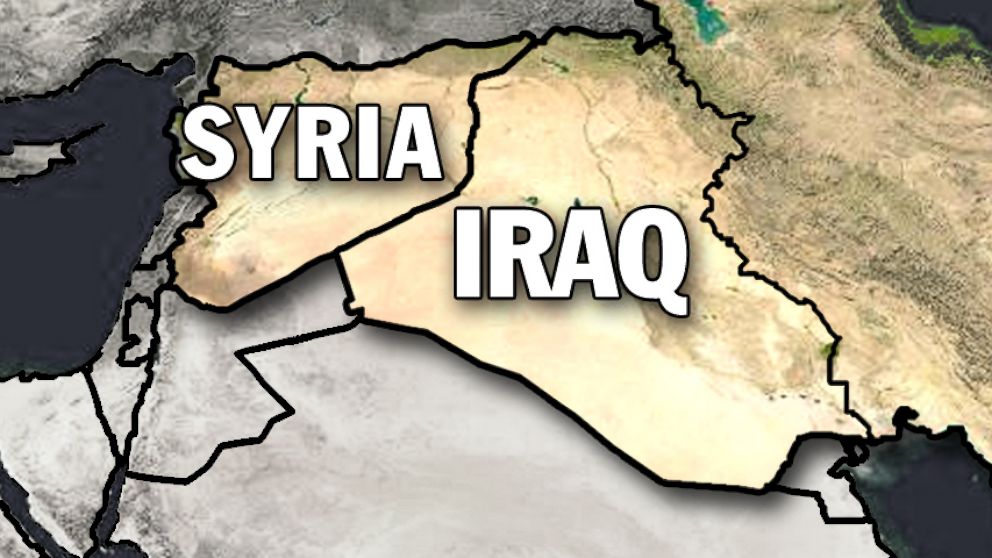
Map of Shared Boarder Between Syria and Iraq
Professors Nabil Al-Tikriti, Ranjit Singh, Jason Davidson and Eric Bonds held a panel discussion on Nov. 11 entitled “OUR NEWEST WAR: UNDERSTANDING U.S. MILITARY POLICY IN IRAQ AND SYRIA.” The panel participants provided an overview of this policy that, since September, has included bombing missions and missile strikes in both countries to “degrade and defeat” the Islamic State, while the U.S. government is also arming and training – or has plans to train – Syrian and Iraqi combatants. The panelists went on to evaluate this policy from their own professional perspectives and to discuss how it might develop in the future. There was a great student turnout, so the panelists would like to thank all faculty who announced this event in their classes.
UMW Research Team Presents at Public Sociology Conference
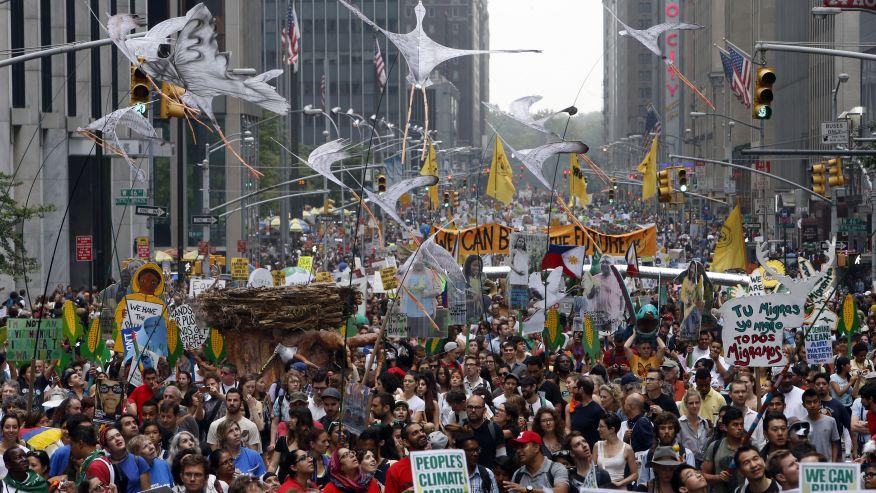
People’s Climate March, September 21, 2014
Undergraduates Beatrice Ohene-Okae (Environmental Science) and Zakaria Kronemer (Philosophy) presented their research project, “Studying Carbon Violence,” with Assistant Professor of Sociology Eric Bonds at George Mason’s annual public sociology conference, which this year was entitled “(Re)Visions of the Future: Public Sociology, Environmental Justice, and the Crisis of Climate Change.” Beatrice and Zakaria presented some initial findings of their investigation into violence associated with global fossil fuel resource extraction. Their work is part of a larger scholarly project, guided by Dr. Bonds, that is exploring linkages between violence, conceptualized in different ways, and the world’s largest oil, gas, and coal companies.
Bonds Publishes New Social Problems Text
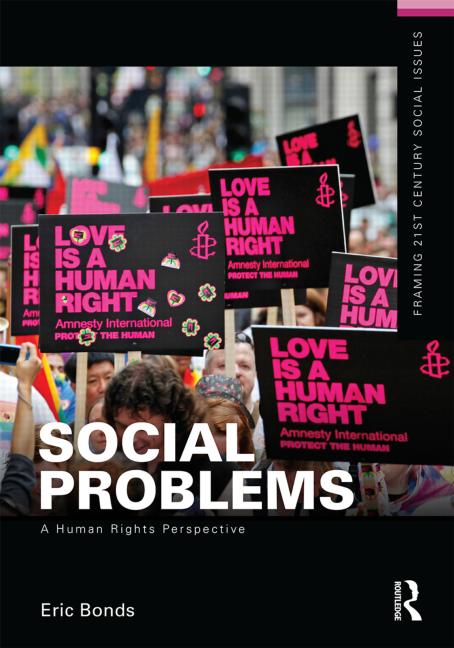 Eric Bonds, assistant professor of sociology, recently published a new book with Routledge Press, entitled Social Problems: A Human Rights Perspective. The book is based on Bonds’ teaching approach in his Social Issues class at UMW, in which he encourages students to both evaluate U.S. society from an international human rights framework while also considering – from a sociological vantage – what human rights are and what they can mean in the first place.