Al-Tikriti Lectures DLA Unit on Middle East Affairs
Professor of Middle East History Nabil Al-Tikriti discussed the current situation in the Middle East this month, covering economic, military, political and diplomatic affairs. He made this presentation to Ft. Belvoir’s Supply Corps Reserve Unit supporting the Defense Logistics Agency (DLA), with reserve unit attendees present from the U.S. Army, Navy and Marines. The presentation included broad ranging discussions of conflicts, tensions, historical backgrounds and theatre realities for the Indo-Pakistan conflict, Yemen, Iran, Iraq, the Caucasus, Turkey, the Gulf States, Syria and Israel-Palestine. In the course of this discussion, Al-Tikriti shared his analysis of the long-term effects of the Gaza Genocide, Ukraine war and China’s construction of a parallel global economy.
Al-Tikriti Discusses Iraq Experiences with AUIB Student Group
Professor of Middle East History Nabil Al-Tikriti spoke about his prior experiences in Iraq with a student group at the American University in Iraq – Baghdad (AUI-B). This talk was remote on May 12 and took place as part of the AUI-B regular speakers’ series. Al-Tikriti wishes to thank AUI-B for the invitation, and the opportunity to meet with today’s Iraqi students.
In the course of his presentation, Al-Tikriti spoke about all of his direct interactions with Iraq, between 1976 and 2017, especially concentrating on his May 2004 visit to Iraq, which proved instrumental in publicizing the effects of the Anglo-American invasion on Iraqi manuscript collections and archives. That visit was later featured in his 2007 article in Library Trends, entitled “‘Stuff Happens’: A Brief Overview of the 2003 Destruction of Iraqi Manuscript Collections, Archives, and Libraries.”
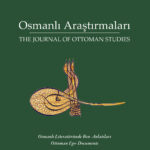
Al-Tikriti Publishes in The Journal of Ottoman Studies
Professor of Middle East History Nabil Al-Tikriti’s article entitled “Prince with Daddy Issues Seeks Sisterly Support: Two Ego Documents Penned by Şehzade Korkud (d. 1513),” was recently published by The Journal of Ottoman Studies / Osmanlı Araştırmaları [Issue LXIV (Winter 2024), pp. 71-98]. This journal issue was a double-blind, peer-reviewed scholarly publication which originated with the 2022 “Ottoman Ego Documents/Ben-Anlatıları” Symposium that Al-Tikriti attended (with UMW faculty travel support) in Istanbul, Turkey.
The article’s abstract: “Following a brief analysis of self-narrative writing among Ottoman royals towards the turn of the sixteenth century, this article argues for consideration of “collective biography” as a methodological approach before presenting two “ego-documents” by one of those royals. Şehzade Korkud (d. 1513), who left behind several small samples of self-narrative, also wrote two clear examples of ego-documents, a treatise to his father Bayezid II (d. 1512) defending his decision to go on the ḥajj, and a fearful letter to his sister Sofu Fatma (fl. 1512) seeking political guidance in the midst of a politically tense succession struggle. The treatise, Wasīlat al-aḥbāb, is summarized and analyzed here, while the letter is transliterated and translated in full.” Read the article.
- Title: Journal of Ottoman Studies Cover
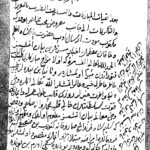
- Korkud’s Letter to his Sister Fatma
Al-Tikriti Offers Lecture on Imperial Legacies and Ethnic Cleansing

Professor of Middle Eastern History Nabil Al-Tikriti
On 23 September 2024, Professor of Middle East History Dr. Nabil Al-Tikriti provided a lecture entitled “Imperial Legacies, Ethnic Cleansing, and Today’s Balkans and Caucasus,” to the Global Learning Center, affiliated with Wichita State University, and taking place on their campus.
The lecture description:
“What drives sectarian politics from the Balkans to the Caucasus? What has caused such widespread ongoing ethnic and religious disputes, debates, and conflicts? In this talk, Prof. Nabil Al-Tikriti will analyze how yesterday’s imperial dissolutions led to today’s sectarian conflict.”
In the course of this lecture, Prof. Al-Tikriti summarized theses about national homogeneity in the 19th-21st centuries by Eric Weitz and Yuri Slezkine, and the construction of the modern international law regime following European Great Power interventions in the Ottoman Empire in the 19th century by Davide Rodogno, before analyzing the role that ethnic mapping has played in international diplomacy geared towards encouraging, implementing, and consolidating ethnic cleansing on multiple fronts — all for the elusive goal of nation-state homogeneity.
Prof. Al-Tikriti thanks UMW Visitors Virginia “Ginny” Gentles, Tim Pohanka, and Terris E. Todd for their particularly staunch support of UMW faculty research, creativity, and educational pursuits. This was an invited lecture.
Al-Tikriti Speaks at Displacement Meeting Hosted by IF20 and IRUSA

Professor of Middle Eastern History Nabil Al-Tikriti
On 27 March 2024, Professor of Middle East History Dr. Nabil Al-Tikriti joined a panel entitled “The Roots of a Nation to Forced Migration: Contravention of International Law,” jointly organized by Interfaith G-20 and Islamic Relief USA. Panelists included: Cynthia Lange (Senior Counsel, Fragomen), Anna Greene (Senior Protection Officer, UNHCR), Parisa Dada (Program Officer, USRAP Capacity Building Resettlement, Asylum, and Integration, International Rescue Committee), and Alia Boltakke (Founder & Attorney, The Boltakke Law Group).
The panel description:
Prominent Experts Address the Growing Millions Seeking Asylum (AP News)
Al-Tikriti Discusses Gaza Crisis with NAACP Youth & College Division

Professor of Middle East History Nabil Al-Tikriti
On 6 November 2023, Dr. Nabil Al-Tikriti, Professor of Middle East History, was honored to join Marya Hannun of the Middle East Report (MERIP) and the University of Exeter in discussing both the general history of the Israeli-Palestinian conflict and the specific ongoing crisis in Gaza, together with the NAACP (National Association for the Advancement of Colored People) Youth and College Division. This lengthy conference call was joined by roughly 50-60 NAACP collegiate leaders as well as several senior NAACP leaders.
Public Statement: Scholars Warn of Potential Genocide in Gazau (Veterans Today)
Al-Tikriti Co-Develops and Co-Edits Middle East Report
In April 2023, Middle East Report [MERIP] Issue #306, “The State of Iraq: 20 Years After the Invasion,” was officially published. UMW Professor of Middle Eastern History Nabil Al-Tikriti joined the team of developers and editors who invited contributors and edited content for the issue, available online.
The Issue Development Team (IDT) consisted of Profs. Nabil Al-Tikriti, Lisa Hajjar of UC-Santa Barbara, Shamiran Mako of Boston University, and Marsin Alshamary of the Brookings Institution. Marya Hannun is MERIP’s managing editor and oversaw the overall editorial process.
Press Release: “MER issue 306, The State of Iraq—20 Years After the Invasion, begins with the assertion that the anniversary is not a single event but part of an ongoing story. At the center are “the state of Iraq” and the reality in which Iraqis live today. The contributions analyze state-society relations, untangle political dynamics and follow flows of capital and power as they lay bare the enduring legacy of the 2003 invasion, occupation and “reconstruction.” With chilling precision, pieces explore the social, political, economic, cultural, spatial and environmental landscape of today’s Iraq. They make clear the structural effects of war as well as its human toll. At the same time, the essays invite readers to look toward the future, with hope and caution. This issue also marks the beginning of a collaboration between MERIP and Jummar, an independent Iraqi media initiative whose work promotes new voices from Iraq and brings English-language knowledge of Iraq into Arabic. Jummar has translated articles from the issue, and Jummar’s designer, the Baghdad-based visual artist Atef Al Jaffal, designed the cover: Iraq’s Crying Child. ”
In addition to participating on the IDT, on April 4 Al-Tikriti joined with Profs. Hajjar, Mako, Alshamary, and Dr. Haider Ala Hamoudi of the University of Pittsburgh Law School to discuss the issue’s findings at a Boston University sponsored webinar:
Contributions to the issue included: Fanar Haddad, “Perpetual Protest and the Failure of the Post-2003 Iraqi State,” Zahra Ali, “Iraqi Women’s Activism — 20 Years After the US Invasion,” Zeinab Shukur, “Water, Oil, and Iraq’s Climate Future,” Hamzeh Hadad, “Two Decades of Uneven Federalism in Iraq,” Bilal Wahab, “The Rise and Fall of Kurdish Power in Iraq,” Renad Mansour, “The Political Logic Behind Iraq’s Fragmented Armed Forces,” and Hannibal Travis, “Perspective — Recognizing and Repairing the Harm to Iraq’s Minority Communities.” The issue also includes “Interview — The Past, Present, and Future of Iraq’s Cultural Heritage” with Mark Altaweel, Jaafar Jotheri, and Hannah Parsons-Morgan.
Dr. Al-Tikriti thanks everyone involved in the completion and publication of this MERIP issue, which marks the end of his six year term serving on MERIP’s Editorial Committee. In the course of those six years, Dr. Al-Tikriti served on five Issue Development Teams.
Middle East Report is published by the Middle East Research and Information Project (MERIP), a progressive, independent organization. Since 1971 MERIP has provided critical analysis of the Middle East, focusing on political economy, popular struggles and the implications of U.S. foreign policy for the region.