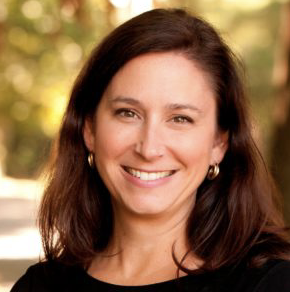
In her weekly column in The Free Lance-Star, Lynne Richardson writes about what to do when an employee tells you something isn’t his or her job.
Read the whole column here:
May 19, 2026
A Newsletter for UMW Faculty and Staff
In her weekly column in The Free Lance-Star, Lynne Richardson writes about what to do when an employee tells you something isn’t his or her job.
Read the whole column here:
Shumona Dasgupta, Associate Professor of English, recently presented two conference papers, “A Counter Discourse to Bollywood: Gender, Nation and Violence in Bengali Partition Cinema” at the Association of Asian Studies Conference in Washington, DC March 22-25 and “An(other) Story: Memory, Trauma and Identity in Muslim Narratives of the Partition” at the American Comparative Literature Association’s annual conference hosted by UCLA in Los Angeles March 29-April 1.
Assistant Professor of Religion Jennifer Barry helped co-organize a series of events in the Washington D.C. area throughout the academic year for the First Millennium Network (firstmillenniumnetwork.org). The FMN is a cross-institutional collaborative network that hosts academic events around Northern Virginia and Washington D.C. Barry’s involvement in the Network has been a direct response to UMW’s President Troy Paino’s call to put Mary Washington on the map. The Network places special emphasis on the diversity of, and interconnections among, the religious communities within first millennium societies—Christianity, Islam, Judaism, Manicheanism, Zoroastrianism, etc.—in their multitude of forms.
On Friday, April 13, 2018, Barry, along with her fellow steering committee members, organized a day-long colloquium on “The Materiality of Relics in the First Millennium” at the University of Maryland, College Park. Four experts on relics and materiality broadly conceived were invited to share their research. Their disciplines ranged from archaeology, Carolingian textiles, Byzantine liturgical studies, and early Islamic textual practices. Each speaker was charged with the task to talk across their disciplinary boundaries, which helped to generate new and creative conversations. The day concluded with a session of reflection lead by Jennifer Barry and Samuel Collins to promote interdisciplinary connections and address thematic threads throughout the day.
Dan Hirshberg, assistant professor of religion, published “The Guru Beyond Time: Padmasambhava in Eight Aspects and Three Exalted Bodies” in The Second Buddha: Master of Time (Kestrel/Penguin), a volume for the current exhibition at the Rubin Museum of Art in New York City. Written for both popular and academic audiences, the chapter focuses on the art and iconography of Tibet’s original cultural hero. Two of Hirshberg’s photographs from Nepal appear in it as well.
Also, on March 24th in Washington D.C., Hirshberg presented a paper at the annual meeting of the Association for Asian Studies. Focusing on the emergence of an early, ferocious emanation of Padmasambhava, the paper was titled “The Nominal and Iconographical Elaboration of Padmasambhava as the Fierce Guru (Gu ru drag po).” This developed from some of the research undertaken during his Jepson Fellowship year.
Last, at the conference, the Association for Asian Studies awarded Hirshberg its Honorable Mention citation for the E. Gene Smith Book Prize for his recent monograph, Remembering the Lotus-Born (Wisdom 2016).
A student journalist for the Asia Experts Forum, an online journal run by the Keck Center for International and Strategic Studies at the Claremont McKenna College, interviewed Surupa Gupta, associate professor of Political Science and International Affairs on the prospects for economic growth and the state of economic policymaking in India under the Modi administration.
Here is a link to the interview: https://asiaexpertsforum.org/dr-surupa-gupta-indias-economic-growth/
Douglas Noble, director of Dodd Auditorium, was invited back to State University of New York at Geneseo to light two dance pieces in celebration of the 50th anniversary of the Geneseo Dance Ensemble from April 19 to April 22, 2018. Noble graduated from SUNY Geneseo in 1986 with a bachelor’s in dramatic arts and received his master’s from the University of Oklahoma in lighting design with a concentration in dance lighting. While at Geneseo, he lighted a number of dance pieces for the Dance Ensemble, where he fell in love with dance and dance lighting. Noble was asked last April if he would be able to participate in the celebration and has looked forward to going back for the past year.
“It was great to go back where my career really started and work with one of my mentors, Jonette Lancos, again,” he said. Noble spent six days working with alumni, faculty and current students to help produce this celebration. He also participated in a panel discuss with other alumni about how dance has influenced their lives and held a discussion with current theatre and dance students on his career path from “Geneseo to the University of Mary Washington.”
“I was honored and thrilled to be able to participate in this amazing achievement for the Theatre and Dance Department at Geneseo,” he said.
One of the pieces Noble got to light was a piece by Nona Schurman (1909 – 2016) called “Songs from the Hebrides” that was choreographed in 1951 and was the first dance piece to receive a copyright.
“This made the second historic piece that I have been involved with in connection with Geneseo.” While a student, he designed for the Humphrey-Weidman piece “Brahams Waltzes” that was set by Deborah Carr.
On April 14, Professor of English Chris Foss presented a conference paper entitled “Locating the Monstrous Body in Monstress and My Favorite Thing Is Monsters through a Disability Studies Lens” at the 49th annual convention of the Northeast Modern Language Association in Pittsburgh.
His paper took for its focus the highly praised comics collections Monstress, Vols. 1 and 2, by Marjorie Liu/Sana Takeda (Image Comics 2016-17) and the much ballyhooed debut graphic novel My Favorite Thing is Monsters [Book One] by Emil Ferris (Fantagraphics Books 2016).
Foss explored how that the location of the monstrous body in this particular textual format, and in these two texts in particular, offers a range of diverse possibilities for both reinforcing and exploding the literary and the literal normative borders that have been constructed to define what is monstrous as defective and deformed and disabled and diseased. Using an intersectional approach, he aimed to suggest how multiple other facets of the monstrous (including ethnic/racial, foreign, freakish, gothic, hybrid, perverse, political, and sexual aspects) overlap with disabled monstrosity and together blur, cross, deconstruct, and/or erase numerous inextricably interrelated borders within and around the human.
Lynne Richardson’s most recent column in The Free Lance-Star addresses body language in the workplace.
“What does your body language tell your co-workers?” Richardson asks. Turns out, volumes.
You can read the column here:
Steve Greenlaw, a UMW economics professor, talks about online teaching in an Inside Higher Ed story called What Online Teachers Have Learned from Teaching Online.
Professor of English Chris Foss has published a book review entitled “Mapping the Networks of India in Britain” in the most recent number of English Literature in Transition, 1880-1920.
His 1466-word review takes for its focus Elleke Boehmer’s recent monograph from Oxford University Press, Indian Arrivals 1870–1915: Networks of British Empire.
Now in its 61st year, ELT is one of the most established venues for scholarly work on literature from the late Victorian, Edwardian and early Modernist periods.