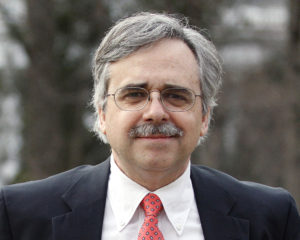
Warren Rochelle, professor of English, was the featured writer on The Rainbow Minutes, a feature of WRIR, 97.3. His topic was Gay Science Fiction and Fantasy. Check out http://wrir.org/ for more information.
UMW Welcomes New Director of Disability Resources
The Office of Disability Resources would like to introduce our new Director, Dr. Sandra Fritton. Fritton comes to us from Virginia Commonwealth University, and we are very excited for her to join our team. We will be hosting two meet and greet sessions to welcome her and give you the opportunity to meet her. The first will be held on Tuesday Jan. 6, 2015 between 2 – 4 p.m. and the second will be held on Jan. 21, 2015 between 2-4 p.m. Light refreshments will be provided. Please join us.
We look forward to spending some time, in the New Year, with you all.
Sincerely,
Alison Grimes, M.Ed
Assistant Director, Disability Resources
University of Mary Washington
401 Lee Hall
1301 College Avenue
Fredericksburg, VA 22401
(ph) 540-654-1266
(fx) 540-654-2155
Al-Tikriti Writes Book Chapter
Nabil Al-Tikriti, associate professor of history, recently published a chapter in an edited volume entitled “Hall Ishkal al-Afkar: An Ottoman Royal’s Shari’a Argument For Imperial Control Over Sea Ghazi Plunder.”
This segment of an edited volume originated as a chapter in Al-Tikriti’s dissertation, and was then expanded and refined for a presentation for the “La Frontiere Mediterraneenne du XVe au XVIIe Siecle: Echanges, Circulations, et Affrontements” conference in Tours in 2009. It appeared in print in 2013. It summarizes and analyzes in English an Arabic work by Sehzade Korkud (d. 1513), entitled “Hall Ishkal al-Afkar fi Hill Amwal al-Kuffar.” Also appearing in 2013 was a facsimile edition of Korkud’s entire text, along with a Turkish translation of the entire text, and a lengthy scholarly introduction of the text. This text (in the context of its 2013 publication and translation into Turkish) does appear to carry certain implications for contemporary developments in the region concerning concubinage, plunder, and “the imperial fifth.” Al-Tikriti’s chapter in this conference’s edited volume provides a brief synopsis and analysis of the text in English for those interested in understanding certain Ottoman positions in the early 16th century. The full citation of the Turkish edition is: [Sehzade Korkud, “Islam’da Ganimet ve Cariyelik: Osmanli Sistemine Iceriden Bir Elestiri,” Asim Cuneyd Koksal, ed., and Osman Guman, trans., Istanbul: ISAR, 2013].
Gray to Serve with National Association Interest Group
Edward Gray, Systems Integration and Support Specialist in UMW’s IT Support Services, has been elected to the leadership of the Higher Education Special Interest Group for the IT Service Management Forum’s USA Chapter. He will serve one year as President-Elect, one year as President, and one year as Past President.
Gray has been at UMW for over 14 years, serving in various IT roles. He earned an MS in Management Information Systems from UMW in 2010. He is a participant in Leadership UMW. He has also earned several technical and service management certifications.
itSMF USA is a non-profit association dedicated to building a community of professionals for the purpose of networking, knowledge sharing, and education to advance the service management profession and strengthen its members. The Higher Education Special Interest Group is devoted to discussion, development, and adoption of IT Service Management principles in support of institutions of higher education. For more information on itSMF USA or its Higher Education Special Interest Group, contact Edward Gray or visit their website at http://www.itsmfusa.org.
Farnsworth Gives Lecture
Stephen Farnsworth, professor of political science and director of the University’s Center for Leadership and Media Studies, recently gave a public lecture “Gerrymandering, Partisan Combat and the Vanishing Moderates in Virginia Politics,” before a joint meeting of the Loudoun County League of Women Voters and the One Virginia 2021 in Potomac Falls, Virginia.
Leigh Penn Selected for Statewide Panel
Leigh Penn, Accounts Payable Manager, was selected by the Department of Accounts to serve on a non-voting panel for the Statewide Charge Card Program Services request for proposals. She was chosen as a subject matter expert to represent higher education needs/wants and her former service as a Pcard analyst.
Leo Lee Active on Sabbatical in Korea
During his semester sabbatical leave, Associate Professor of Mathematics Leo Lee has served as visiting professor at Sogang University in Seoul, Korea, teaching courses in computational and applied mathematics for both undergraduate and graduate students. Dr. Lee has also given several research talks on stochastic partial differential equations at Yonsei University and Sogang University and recently published the paper “An Optimization Based Domain Decomposition Method for PDEs with Random Inputs” in the journal Computers & Mathematics with Applications. In addition, Dr. Lee has served as the symposium chair for mathematics and statistics for the US-Korea Conference 2015.
UMW History Professor Featured on With Good Reason
University of Mary Washington Professor of History Jeffrey McClurken will be featured on the “With Good Reason” public radio program, December 13-19.
The show, “Give War and Peace a Chance,” will consider how history is captured in anticipation of the 150th anniversary of the first publication of Tolstoy’s “War and Peace.” McClurken will discuss how, despite the way that historical movies are often inaccurate, history can be learned from the way the stories are told. The program also will feature commentary from a faculty member at the University of Virginia.
“With Good Reason” is a program of the Virginia Foundation for the Humanities. The show airs weekly in Fredericksburg on Sundays from 1-2 p.m. on Radio IQ 88.3 Digital. To listen from outside of the Fredericksburg area, a complete list of air times and links to corresponding radio stations can be found at http://withgoodreasonradio.org/when-to-listen. Audio files of the full program and its companion news feature are available online at http://withgoodreasonradio.org/2014/12/give-war-and-peace-a-chance/.
McClurken, who joined the UMW faculty in 2001, has been instrumental to the university’s digital history efforts and has been on the forefront of incorporating technology in the classroom. Currently the special assistant to the provost for teaching, technology and innovation, McClurken previously served as chairperson of the history and American studies department.
McClurken is recipient of a prestigious 2014 Outstanding Faculty Award from the State Council of Higher Education of Virginia, the commonwealth’s highest honor for faculty at Virginia’s public and private colleges and universities. He has presented numerous lectures and presentations across the country on teaching with social media, digital history and 19th-century American social and cultural history. His 2009 book “Take Care of the Living: Reconstructing Confederate Veteran Families in Virginia” examines the long-term consequences of the Civil War for veterans and their families in Southside Virginia.
Named to the Princeton Review’s inaugural list of “300 Best Professors,” McClurken received the Mary Washington Young Alumnus Award in 2003 and the J. Christopher Bill Outstanding Faculty Service Award in 2012.
A 1994 graduate of Mary Washington, McClurken received a master’s degree and doctorate from Johns Hopkins University.
UMW Professor Receives Outstanding Faculty Award
University of Mary Washington Professor of Psychology Miriam Liss is the recipient of a prestigious 2015 Outstanding Faculty Award from the State Council of Higher Education of Virginia (SCHEV).
The awards are the commonwealth’s highest honor for faculty at Virginia’s public and private colleges and universities, recognizing superior accomplishments in teaching, research and public service. This year, 13 faculty members were selected from a highly competitive pool of candidates. In February, the recipients will attend a ceremony and luncheon in Richmond and also will be introduced on the floor of the General Assembly.
Liss, who joined the UMW faculty in 2001, is a clinical psychologist and has conducted research on parenting, division of labor and work-family balance.
The co-author of “Balancing the Big Stuff: Finding Happiness in Work, Family and Life,” Liss also has published articles about autism and developmental disorders, as well as sensory processing sensitivity, self-injurious behaviors, feminist identity and body image. She has developed a collaborative program between UMW and the New England Center for Children (NECC) where students can spend a semester at NECC outside of Boston, performing applied behavioral analysis in a school setting and taking classes for UMW elective credit.
Her articles have been published in numerous journals including the Sex Roles, Psychology of Women Quarterly, Personality and Social Psychology Bulletin, Journal of Personality and Individual Differences, and Journal of Child Psychology and Psychiatry and Allied Disciplines. She also regularly presents at national conferences. Liss has been interviewed for her work on intensive and attachment parenting for the Washington Post, MSNBC.com and Live Science.
Liss’s honors include election into Phi Beta Kappa and Psi Chi, where she was selected as the regional faculty advisor winner and supervised the chapter winning the National Chapter Award in 2006. She received the UMW Outstanding Young Faculty Member Award in 2005 and was a finalist in the SCHEV state award in 2006 and 2009. She also was named one of Princeton Review’s Best 300 Professors.
Liss received a bachelor’s degree in psychology from Wesleyan University, in addition to a doctorate and master’s degree in clinical psychology from the University of Connecticut.
The General Assembly and Governor created the Outstanding Faculty Award program in 1986. Since the first awards in 1987, more than 300 Virginia faculty members have received this high honor. Professor of History Jeffrey McClurken was the 2014 recipient of the award.
Nabil Al-Tikriti Presents Paper on Ottoman Cultural History
On Nov. 23, 2014, Associate Professor of Middle Eastern History Nabil Al-Tikriti presented a paper at the 2014 Middle East Studies Association Conference in Washington, D.C. The paper, entitled “Greatness Denied: Firdevsi-yi Rumi on the Cusp of Ottoman Sunnism,” was part of an Ottoman History panel, entitled “The Sunnification of the Ottoman Ideology and Polity, 16th to 17th Centuries.”
The paper abstract is as follows: “Ilyas Çelebi “Firdevsi-yi Rumi” (fl. 1512) served primarily at the courts of Sultan Bayezid II (d. 1512) and Prince Korkud (d. 1513), authoring works of narrative history, elegiac poetry, gestes, and hagiography. In this paper, I will summarize what is known of his biography and analyze his presentation of Ottoman, Turkish, and Muslim identity.
Firdevsi, a litterateur with a considerable sense of self, completed more than twenty works while serving at the apex of Ottoman cultural production. While very successful at attracting patronage and support for lengthy and ornate literary works, his oeuvre was mostly lampooned by those who followed in the decades after his death.
Why would a writer who was so successful in his own lifetime be so reviled within a few decades of his death? Analyzing the political content and identity positions staked out by Firdevsi provides a tentative answer – societal views changed abruptly in the first tumultuous decades of the early 16th century. Firdevsi’s use of the term “Sunni” in his Qutb-name, explanation of Turkish conversion to Islam in his Süleyman-name, and portrayal of Anatolian Sufism in his Vilayet-name each provide clues as to why subsequent literary critics found his scholarship unreliable, his poetry unspeakable, and his views objectionable.”
The panel abstract is as follows: “Sunni identity of the Ottoman Empire is often taken for granted. However, recent research has begun to question the nature of Ottoman Sunnism and the process by which the Ottoman state began to distance itself from ‘confessional ambiguity’ that prevailed in Central Asia, Iran and Anatolia from the mid 13th to the late 15th century, and became increasingly concerned with formulating and enforcing a Sunni orthodoxy. While it is well known that the religious ideology of the Safavid Empire, based on Shia principles and folk Islam, began to be formulated in the early 16th century, it is not commonly acknowledged that Sunni theology was simultaneously experiencing a transformation, both in reaction to the developments in the Safavid realm and as a consequence of various socio-political processes within Ottoman territories. Titled ‘Sunnification of Ottoman Ideology and Society, 16th-17th Centuries’ our roundtable will examine this historical process from the perspective of the state, other agents of Sunnification, and those who were targeted by the new measures for correcting belief and practice.”