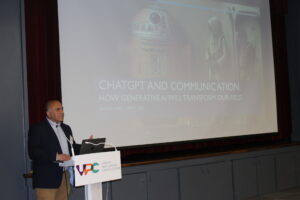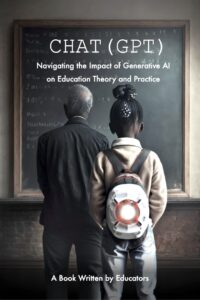
Professor of Communication Anand Rao co-authored and co-edited a new book, Chat(GPT): Navigating the Impact of Generative AI Technologies on Educational Theory and Practice, with a host of other authors and three other editors. The book, in which educators discuss ChatGPT and other artificial intelligence tools, was published by Pedagogy Ventures and is listed as the No. 1 new release in Curricula and in the Top 10 for Educational Professional Development. It includes 38 chapters and essays, 14 appendixes and more than 600 pages. The authors’ goal is to help prepare educators for fall 2023 as AI is most likely to continue to disrupt and transform education at all levels. Read more.
Professors Turn to ChatGPT to Teach Students a Lesson (The Wall Street Journal)
Rao Referenced in ‘Wall Street Journal’ Discussion of ChatGPT

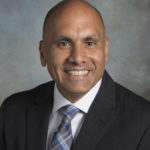
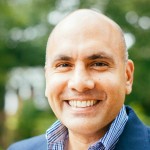
Professor of Communication and Chair of the Department of Communication and Digital Studies Anand Rao
Professor of Communication and Chair of the Department of Communication and Digital Studies Anand Rao contributed to a Wall Street Journal article on ChatGPT titled “Professors Turn to ChatGPT to Teach Students a Lesson; The powerful paper-writing chatbot presents an educational challenge: Ban it or build on it?” published on Jan. 25, 2023. Rao discussed the impact the generative AI tools, like ChatGPT, will have on knowledge production. Read more.
The article also was published in Elite News. “It really seems to change the nature of knowledge production itself,” Rao said. Read more.
Rao also contributed to a webinar titled “Generative AI and ChatGPT: The Short and Long-Term Impacts on Education” on Wednesday, Jan. 18. His presentation focused on higher education and included discussion of how ChatGPT could be used by students to cheat, but also opportunities for use of ChatGPT in the classroom to support the student writing process. He also outlined broader concerns about generative AI, including algorithmic bias and AI’s use of other artist’s creative work. Discover information about the webinar, including a soon-to-be-released recording.
Professors Turn To ChatGPT To Teach Students A Lesson (Elite News)
Rao Named to Richmond Forum Board of Directors

Professor of Communication and Chair of the Department of Communication and Digital Studies Anand Rao
Professor of Communication Anand Rao joined the Board of Directors of the Richmond Forum this summer and will serve a three-year term to support the work of The Forum and its Speech and Debate Initiative. Rao, who serves as chair of UMW’s Department of Communication and Digital Studies, has presented at dozens of national and international academic conferences, and regularly serves as a consultant and workshop leader for academic programs in the United States. He has more than 25 years of experience with speech and debate at the high school and college level and served as a consultant on a documentary about the National Debate Tournament.
The Richmond Forum is the largest nonprofit lecture series in America and produces five programs each year. The biggest and most influential names in the world have taken the stage at The Richmond Forum, including past U.S. presidents, sitting heads of state and leaders from the sciences, arts, business and more. In 2018, the Richmond Forum created the Speech and Debate Initiative with the goal of having high-performing speech and debate activities in every public middle and high school in the Richmond region by 2025, the 250th anniversary of Patrick Henry’s historic speech. National Speech & Debate Association Executive Director Scott Wunn recognized the importance of this initiative, stating “the Richmond Forum has the potential to spark a national trend in which independent nonprofits work closely with local school districts, statewide organizations and the NSDA to strengthen speech and debate in their communities.”
Rao has regularly contributed to Richmond area debate student workshops and this August was an invited speaker for The Forum’s inaugural coaches workshop training 25 new speech and debate coaches in the region.
UMW Offers Free Course to All: ‘Life After COVID’
Building on the enthusiastic response to last year’s COVID-19 in Context course, the University of Mary Washington is offering another free, open-to-all series in June. Life After COVID, delivered to homes, backyards and porches via Zoom and YouTube, will run Tuesdays and Thursdays, June 1 to July 1.
“We view opportunities such as the Life After COVID course as part of our mission as a public liberal arts and sciences institution,” said UMW College of Arts and Sciences Dean Keith Mellinger, who is co-facilitating the course with Assistant Dean Betsy Lewis and Communication and Digital Studies Chair Anand Rao.
UMW’s largest course ever, last year’s COVID-19 in Context event reached nearly 2,000 participants in 39 states, plus Washington, D.C., and countries across the globe, including Canada, England, France, Switzerland, Japan and Ghana. Like its predecessor, the course this summer will bring together current and incoming students, alumni, parents, community members, faculty and staff to explore timely COVID-related topics, Rao said. “It’s a big tent for academic discussion, which is the best model of what higher education can provide in today’s world.” Read more.
Rao Interviewed About Gandhi’s Influence on James Farmer

Professor and Chair of the Department of Communication and Digital Studies Anand Rao
The legacy of Mahatma Gandhi goes well beyond the Indian Freedom Struggle. He has influenced countless movements and struggles for freedom and democracy around the world, decolonization struggles, including the civil rights movement within the United States.
The Metta Center for Nonviolence interviewed P. Anand Rao (Professor of Communication, Chair of the Department of Communication and Digital Studies) to discuss Gandhi’s influence on Dr. James Farmer and the American Civil Rights Movement. The interview is part of the Metta Center’s podcast, “Nonviolence Radio,” and the interview was conducted by UMW alum Stephanie Van Hook. The interview can be found at: https://mettacenter.org/ppr/gandhis-influence-on-dr-james-farmer/
Rao Pens Editorial on Gandhi for ‘Great Lives’ Lecture

Professor of Communication and Chair of the Department of Communication and Digital Studies Anand Rao
Professor of Communication and Chair of the Department of Communication and Digital Studies Anand Rao penned an editorial on the life of Mohandas K. Gandhi, also known as Mahatma Gandhi, in The Free Lance-Star in advance of his ‘Great Lives’ lecture on Thursday, March 11. The lecture can be watched here.
WHILE touring India in 1959, Dr. Martin Luther King, Jr. visited Mani Bhavan, the house where Mahatma Gandhi had lived in Mumbai. It was in this home that Gandhi launched his Indian movement for truth and nonviolence, called satyagraha.
The home had been turned into a museum, and the upstairs room where Gandhi had slept still held his mattress and shoes. When King visited, he asked if he could spend the night in that room, saying, “I am not going anywhere else. I am going to stay here, because I am getting vibrations of Gandhi.”
The curators pulled two cots into the room, and Rev. King and his wife, Coretta Scott King, spent the night next to Gandhi’s mattress. Soon after, King told All India Radio that he had decided to adopt Gandhi’s methods of civil disobedience as his own.
Gandhi’s philosophy of satyagraha inspired development of our own civil rights movement. Dr. King returned from his trip to India committed to employing a Gandhian strategy of nonviolence.
But Dr. King was not the only civil rights leader to follow Gandhi’s philosophy. While Dr. King was introduced to Gandhi and his practice of nonviolent protest in the late 1940s, James Farmer started following the teachings of Gandhi as early as 1940. Farmer employed the techniques and practice of satyagraha in the first civil rights sit-in in Chicago in 1942. Read more.
UMW Faculty Learning Community Publishes Online
Eleven UMW faculty from a variety of disciplines worked together in 2020 as the Advocacy, Deliberation, and Civic Engagement Learning Community. The group was led by Leslie Martin and Anand Rao, representing the Center for Community Engagement and the Speaking Intensive Program. The goal of the group was for the participants to work together to develop course materials that incorporate advocacy and deliberation activities to support civic learning in their courses. Modeled after a similar initiative at VCU, the UMW faculty learning community met through the Spring 2020 semester to study the ways that advocacy, deliberation, and debate, could be used in class, and the faculty then developed materials, including activities, assignments, and rubrics, for use in college classes. The materials were collected and were recently published online through UMW Eagle Scholar. The publication is titled “Supporting Advocacy, Deliberation, and Civic Learning in the Classroom,” and includes contributions from the following faculty: Leslie Martin (Sociology), Anand Rao (Communication), Adrienne Brovero (Communication, UMW Debate), Gonzalo Campos-Dintrans (Spanish, FSEM), Steve Greenlaw (Economics, FSEM), Pamela Grothe (Environmental Sciences), Jason Hayob-Matzke (Philosophy), Jodie Hayob-Matzke (Environmental Sciences), Christine Henry (Historic Preservation), Joseph Romero (Classics), and Andrea Livi Smith (Historic Preservation).
Subramanian on With Good Reason

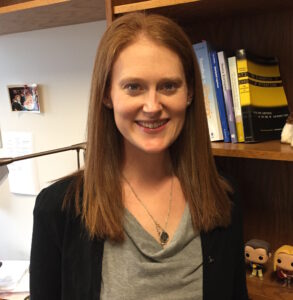
Assistant Professor of Communication Sushma Subramanian
Sushma Subramanian, assistant professor of journalism, appeared on a special Valentine’s Day episode of With Good Reason to talk about her new book on the sense of touch, which was released this week https://withgoodreasonradio.org/episode/my-pandemic-valentine/