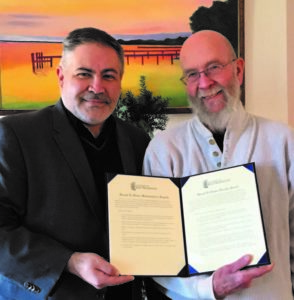
Associate Professor of English Shumona Dasgupta
Associate Professor of English Shumona Dasgupta recently presented on representations of the Indian partition at two professional conferences.
She presented “Subaltern Pasts: Other Archives of the Indian Partition (1947)” at the thirtieth annual British Commonwealth and Postcolonial Studies conference (BCPSC) hosted by the Georgia Southern University, GA (February 15-19, 2021) and held as a virtual conference.
She also presented “A Geography of Crisis: Memorializing the Partition (1947) in Indian Cinema” at the fifth annual Memory Studies Conference (MSA) hosted by the University of Warsaw, Poland (July 5-9, 2021), rescheduled from 2020, and held as a virtual conference.


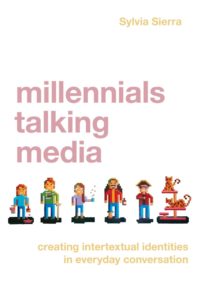 “This book examines how a group of U.S. Millennial friends in their late twenties embed both old media (books, songs, films, TV shows) and new media (YouTube videos, video games, and internet memes) in their everyday talk for particular interactional purposes. Multiple case studies are presented featuring the recorded talk of Millennial friends to demonstrate how and why these speakers make media references in their conversations. These recorded conversations are supplemented with participant playback interviews, along with ethnographic field notes. The analysis demonstrates how the speakers phonetically signal media references in the speech stream, how they demonstrate appreciation of the references in their listening behaviors, and how they ultimately use media references for epistemic, framing, and identity construction purposes, often (but not always) when faced with epistemic, or knowledge, imbalances as well as interactional dilemmas, or awkward moments in interaction. The analysis shows how such references contribute to epistemic management and frame shifts in conversation, which is ultimately conducive to different forms of Millennial identity construction. Additionally, this book explores the stereotypes embedded in the media that these Millennials quote, and examines the effects of reproducing those stereotypes in everyday social life. This book explores how the boundaries between screens, online and offline life, language, and identity are porous for Millennials, and weaves together the most current linguistic theories regarding knowledge, framing, and identity work in everyday interaction, illuminating the interplay between these processes.”