RICHARDSON: The Art of Decision Making (The Free Lance Star)
Richardson Column in The Free Lance-Star

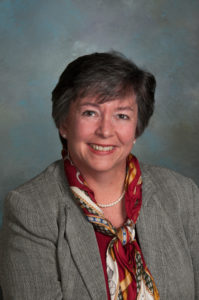
UMW College of Business Dean Lynne Richardson
College of Business Dean Lynne Richardson’s weekly column in The Free Lance-Star discusses TREATING PEOPLE WITH RESPECT.
Once upon a time, there was an organization. This organization welcomed a new head person. This person had come from a similar organization where he had years of experience as the head guy.
Months into the new person’s tenure, a beloved manager was visited by the new boss—she was not doing things as he expected. Even though she was an expert, he wanted to tell her how to do her job. She pushed back a bit. At the next staff meeting, with all of the managers in attendance, he demeaned her in front of her peers.
Appropriately, she went to him privately after the meeting and expressed her distress at being berated in front of her colleagues. He was dismissive of her remarks. She soon resigned.
People in the company took sides. There were those who thought he was well within his rights to have both told her what to do and, when she wasn’t willing to roll over, talk about her to her colleagues. Others were appalled at his behavior. Certainly, they agreed, he could express his desires about how she did her job, but they could not believe he made derogatory remarks about her in front of her peers.
Many in the latter group went to the employee who resigned and asked her to reconsider. She would not. A schism formed within the organization.
What went wrong? Read more.
RICHARDSON: Treating people with respect (The Free Lance-Star)
RICHARDSON: Imagining the future (The Free Lance-Star)
Richardson Column in The Free Lance-Star

UMW College of Business Dean Lynne Richardson
College of Business Dean Lynne Richardson’s weekly column in The Free Lance-Star discusses being bold about your organization’s plans for after the pandemic. Read IMAGINING THE FUTURE.
THE PANDEMIC has totally disrupted so many parts of our lives, not the least of which is the workplace. So I’ve been wondering how our organizations will look in a few years.
In conversations with people who work in a variety of industries, a common theme is astonishment that work requiring an office setting a year ago can effectively be done from home today. One person said to me, “If I hadn’t seen it, I wouldn’t have believed it.” We can relate.
While what we do may be similar, how and where we work is different. So where do we go from here?
RICHARDSON: Accountability is my superpower (The Free Lance-Star)
Richardson Column in The Free Lance-Star

UMW College of Business Dean Lynne Richardson
College of Business Dean Lynne Richardson’s weekly column in The Free Lance-Star discusses holding employees to their commitments. Read ACCOUNTABILITY IS MY SUPERPOWER.
A colleague told me that accountability is my superpower. After reflecting a bit, I determined there was merit to her statement.
First, I hold myself accountable. When I say I’m going to do something, you can count on me to get it done. Whether it’s attending a meeting or completing a task, if I commit, I will do everything in my power to fulfill the commitment. In Gallup’s StrengthsFinder assessment, responsibility is one of my top five strengths. Gallup’s definition of responsibility equates to accountability.
But I don’t think that’s what my colleague was referring to. She noticed that I hold others accountable.
The first step in holding others responsible is communication. Before others can be held responsible for their actions, they must understand what is expected of them. If you work in my unit and have no clue what you need to do, how can we hold you accountable? Read more.
RICHARDSON: Applying rules (The Free Lance-Star)
Richardson Column in The Free Lance-Star

UMW College of Business Dean Lynne Richardson
College of Business Dean Lynne Richardson’s weekly column in The Free Lance-Star discusses how to enforce regulations in a company when it comes to employees with differing abilities. Read APPLYING RULES.
I heard a story that broke my heart. A young man on the autism spectrum has a job in a well-known organization. He made a snack purchase on the honor system at his office break room. When he scanned the item, he hit the wrong button and ended up canceling the transaction instead of charging it. But he didn’t realize what he had done and ate the item.
Later, he was confronted about stealing the $5 item. It’s my understanding that he didn’t explain what happened well, and was placed on suspension for a week. He thought he was going to lose his job, including his important benefits.
I first became aware of the situation while he was on suspension. A relative of his had shared the story and was concerned about what might happen. While I certainly had no way of knowing why he was suspended for a week over such a transgression, I was confident that he would not lose his job over it. The relative indicated he had worked there for 2½ years, had never been late, had never called in sick and volunteered to work late. He had even won a productivity award in a previous month. Read more.