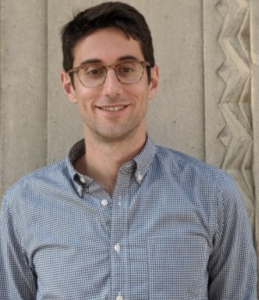
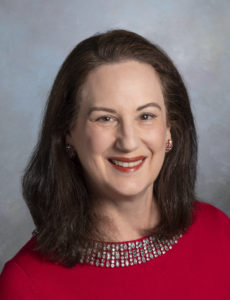
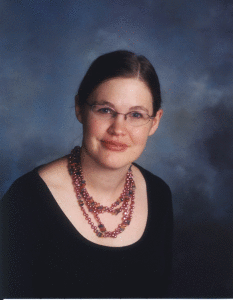
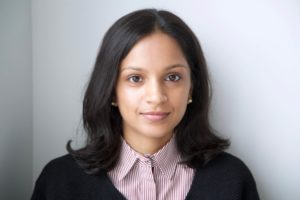
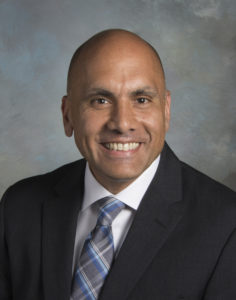
Associate Professsor of Linguistics Paul D. Fallon presented at the 47th North Atlantic Conference on Afroasiatic Linguistics (NACAL), held in Paris from June 24-26, 2019. His paper, entitled “An assessment of Bender’s Proto-Cushitic,” was a scholarly evaluation of the late M. Lionel Bender’s unpublished reconstruction of the ancestral language of many of the languages of the Horn of Africa, including Somali, Oromo and Blin, Dr. Fallon’s special area of focus. His work was supported by a Faculty Research Grant.
Scanlon Edits Special Journal Issue on Poetry and the Visual Arts
Mara Scanlon, Professor of English, served as invited Guest Editor for a special issue of the journal Humanities called “The Sister Arts Since 1900: Poetry and the Visual Arts.” The issue is prompted by the fact that the relation of poetry and visual art to each other, to imitation, mimesis, and the “real,” to pleasure and analysis, to ethics, to the senses, and to craft prompted rich dialogue and debate through at least the 18th century but is oddly flagging in contemporary critical conversation, possibly replaced by or transformed into an emphasis on multimodal and multimedia writing. Inviting essays on ekphrastic poetry and its opposite, photos or art inspired by poems; illuminated text and the art of the book; illustrated poetry for adults and children; the work of artist-poets; collaborations between artists and writers or installations, exhibits, and volumes that combine poetry and photography/visual art; broadsides; concrete and visual poetry; and unique conceptions like the “plastic poetry” of Kansuke Yomomoto or Claudia Rankine’s multigenre and spatially conscious Citizen: An American Lyric, the CFP also asked: Can the two art forms ever be fully collaborative or hybrid, become something greater than the sum of their parts, or is one always secondary or dependent? Is the relationship of poetry and visual art primarily formal, or is it also political, ideological, transgressive, or, as Brian Glavey has suggested, queer? The final collection includes essays by both critics and an artist practitioner, representing universities on three continents.
Humanities is an international scholarly, peer-reviewed, open-access journal that is funded by the academic Knowledge Unlatched initiative.
Bales’ Cubs Book Called “Solid Historical Work”
Reference and Humanities Librarian Jack Bales’ new book, Before They Were the Cubs: The Early Years of Chicago’s First Professional Baseball Team, was favorably reviewed in the August issue of Choice, a major source of book reviews for academic libraries. The review observes that “while this book focuses on the first professional baseball team in Chicago, it also serves as an overview of how the game developed throughout America. Bales … draws on extensive research in newspaper articles and other primary sources to impart not only an impression of the early game but also a glimpse of 19th-century life. … This is a solid historical work, yet it remains accessible to the public at large.”
Barrenechea Presents Literary Paper in Brazil
Antonio Barrenechea, Professor of English, was an invited speaker at the Associação Brasileira de Literatura Comparada in Brasilia, Brazil. His paper was titled “Hemispheric Literary Studies: Yesterday, Today, and Tomorrow.”
Lester Serves on Newseum Panel on Religious Literacy
Associate Professor of Political Science Emile Lester served on a panel for a discussion titled “Religious Literacy in Public Schools: What to Teach and How” at the Newseum’s Religious Freedom Center in Washington, D.C. on Tuesday, July 9. Hosted by The Religious Freedom Center and National Council for the Social Studies (NCSS), the panel coincided with the publication of “Teaching about Religion in the Social Studies Classroom,” a new resource from NCSS.
About the Book: The study of religion is essential for understanding the past and present, and critical for global citizenship in a religiously diverse country and world. This book provides advice, recommendations and resources to help social studies educators know what to teach about religion and how to do it.
Durrant Organizes VIVA Collections Forum
Summer Durrant, Collection Services Librarian, chaired the planning committee for the VIVA Collections Forum, held at the VCCS System Office in Richmond on June 7, 2019.
The Collections Forum is an annual event sponsored by the Virtual Library of Virginia (VIVA), Virginia’s academic library consortium. This year’s theme, “Building Diverse Collections,” featured a keynote presentation by Courtney L. Young, University Librarian at Colgate University, and lightning talks from librarians across the state on initiatives to intentionally select diverse and inclusive materials for their library collections.
Other session topics included promoting Open Educational Resources (OER) and an overview of the new Virginia Faculty Textbook Portal. Durrant also co-moderated a session on “Accessible Print and Electronic Collections,” where attendees discussed ways libraries can make their physical and online resources more accessible to users.
Around 100 academic librarians in Virginia attended the event.
Gately Performs with National Symphony Orchestra
Doug Gately, senior lecturer in the Department of Music, performed with the National Symphony Orchestra, conducted by Steven Reineke on June 28 and 29 in a concert recreating the 1961 concert, Judy Garland at Carnegie Hall. Featured artists were Tony® nominee Laura Osnes, Broadway diva Capathia Jenkins, and Pink Martini’s Jimmie Herrod.
Gately also performed with the National Symphony Orchestra on the televised Capital Fourth Concert, hosted by John Stamos with performances by Carole King, Vanessa Williams, the cast of Sesame Street, Colbie Caillat, Yolanda Adams, Lee Brice, and more.
Larus Comments on U.S.-China Relations to Vietnamese Press
Elizabeth Freund Larus, Professor of Political Science and International Affairs, commented on the upcoming G20 meeting between U.S. President Donald Trump and Chinese leader Xi Jinping in VnExpress, the most read newspaper in Vietnam. Professor Larus projected that there would be no major breakthrough in the U.S.-China trade war at the G20 meeting. She indicated that both the U.S.and China were in a difficult position because the U.S. cannot force China to change its trade practices, and China could not make empty promises in an effort to lift U.S. tariffs on Chinese goods. https://vnexpress.net/the-gioi/rao-can-khien-my-trung-kho-cham-dut-chien-tranh-thuong-mai-tai-g20-3943676.html
Grothe and Students Work to Protect Coral Reefs
Assistant Professor of Earth and Environmental Science Pamela Grothe and her students were featured in an article in The Free Lance-Star titled “UMW students plunge into restoring coral reefs.” The article discussed a new course taught by Grothe called “UMW in Bonaire: Coral, Climate and Conversation,” which was offered this past spring semester. The students learned about climate change and its impact on coral reefs and the marine life that lives within them. They also learned coral conservation methods. Thanks to a partnership with The Scuba Shack dive shop in Fredericksburg, Grothe’s students became scuba-certified so they could apply their research during a trip to the Caribbean island of Bonaire this May. Read more.
Richardson Column in The Free Lance-Star
Read the latest column in The Free Lance-Star written by Lynne Richardson, Dean of the College of Business, titled What do you want from your signage?
Today’s challenge is to look inside and outside your organization at your signage. I’m guessing many of you would give yourself a low score, if you’re looking at your place of business as your customers do.
About a decade ago, I arrived at a new university as dean of the business school. While I wasn’t a customer per se, I sure did have a hard time finding different rooms in the business school building. Why? There had been a renovation and addition to the building immediately prior to my arrival. While each of the conference and team rooms, faculty and staff offices, and classrooms had been numbered, they had not put up a directory anywhere in the building. And there were no directional signs.