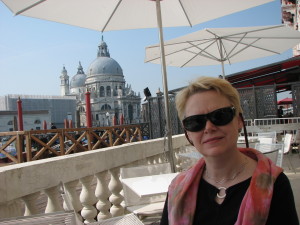
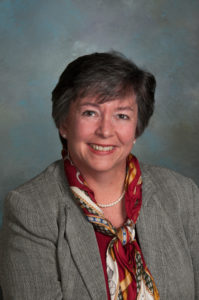
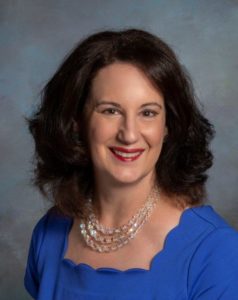
Helen Housley, Associate Professor of Theatre, presented a workshop, “Feeling Shakespeare’s Buzz: Tonal NRG and the Shakespearean Actor,” at the annual Lessac Training and Research Institute’s Conference in Denver, Colo., Jan. 5-7, 2016.
Gray Heads National Association Interest Group
Edward Gray, Systems Integration and Support Specialist in UMW’s IT Support Services, has assumed the lead post in the Higher Education Community of Interest for the IT Service Management Forum’s USA Chapter. He served one year as Assistant Manager. Now, he takes over the role of Community Manager.
[Read more…]
Farnsworth Speaks on Virginia Politics
Stephen Farnsworth, professor of political science and director of the University’s Center for Leadership and Media Studies, recently was part of the Virginia Business Panel in Richmond, where he spoke about the results of the 2015 legislative elections and the key issues in the upcoming 2016 legislative session.
Lee Publishes Research Article in KSIAM
Associate Professor of Mathematics Leo Lee saw the recent publication of his paper “The h x p Finite Element Method for Optimal Control Problems Constrained by Stochastic Elliptic PDEs” in the Journal of the Korean Society for Industrial and Applied Mathematics. Dr. Lee presented a talk on the results of this article at the Joint Mathematics Meetings in Seattle in January.
Bonds Publishes Article on Planning for a Changing Arctic
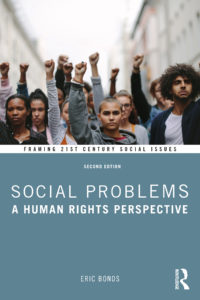
Assistant Professor of Sociology Eric Bonds recently published an article in the journal Environmental Sociology, which is based on his analysis of think tank and national security strategy documents for transformations in the Arctic region linked with global warming. The article, titled “Losing the Arctic: The Corporate Community, the National Security State, and Climate Change,” can be found here: http://www.tandfonline.com/doi/full/10.1080/23251042.2015.1131600
Erchull named Fellow of the Association for Psychological Science
Dr. Mindy Erchull was selected for Fellow status in the Association for Psychological Science in recognition of her sustained outstanding contributions to the advancement of psychological science.
Fallon Presents Research on Linguistic History
Associate Professor of Linguistics Paul D. Fallon presented a paper titled “How the Cushitic languages came by their name” to the North American Association of the History of Linguistic Science (NAAHoLS) at its annual meeting held in Washington, D.C., Jan. 8-10.
Snyder Performed at Electronic Music Midwest
Mark Snyder, Assistant Professor of Music, performed his multimedia composition Facets of Love for processed soprano, harp, guitar, piano, electronics and video on Nov. 21 at Electronic Music Midwest in Kansas City, Kans., with soprano Paige Naylor and harpist Becky Brown.
Electronic Music Midwest is dedicated to programming of a wide variety of electroacoustic music and providing the highest quality performance of electronic media. This annual festival consists of approximately nine short concerts (about one hour in length) over the course of a weekend in autumn. Our goal is to bring together vibrant and interesting artists of all forms, and give them a vehicle for their expressions and a place for them to share ideas with others.
EMM has always featured an eight-speaker surround diffusion system under the guidance of Ian Corbett. The core of the system are eight Mackie 1521 bi-amped speakers, an EAW/QSC subwoofer system and a Soundcraft MH3, 32+4 Channel mixer (named “Emily”). Due to Ian’s expertise, many visiting composers comment that EMM is one of smoothest-run festivals they have ever attended.
Since its beginning, EMM has programmed more than 500 new electroacoustic compositions. Composers have traveled from around the world to graciously share their music with audiences in the Midwest. However, EMM is about more than just playing new music. We strive to create an environment conducive to building community interaction. Most concerts are approximately one hour long, and composers have plenty of time to “talk shop” with each other as well as interact socially with students and audience members.
Nabil Al-Tikriti Co-Publishes Chapter with UMW Alumna on Syrian Kurdish History
On Nov. 16, 2015, London’s Gingko Library released its first publication, a scholarly volume edited by T.G. Fraser and titled The First World War and its Aftermath: The Making of the Modern Middle East. 2014 UMW graduate Laila McQuade and Prof. Nabil Al-Tikriti co-authored the 15th chapter of this volume, titled “The Limits of Soft Power: Why Kurdish Nationalism Failed in the French Mandate of Syria.” This chapter was based on an independent study that McQuade completed under the supervision of Prof. Al-Tikriti in the spring of 2014. Ms. McQuade collected the chapter’s primary sources in the course of a research visit she conducted to the French Ministry of Foreign Affairs archives in Nante, France, supported by the Office of the Dean of the College of Arts and Sciences.
The abstract for the chapter is as follows: “By 1936, the borders of Syria were set by the Franco-Syrian Treaty. Under the treaty, mandatory Syria remained unified, with the exception of Lebanon, and with no provision for Kurdish autonomy. While some have argued that this resulted from the lack of a viable Kurdish independence movement or unity among the Kurds, the Kurds in Syria appear to have had a structured and cohesive nationalist movement. Rather, Kurdish nationalists failed to achieve their primary goal due to their friendly relations with the French and the consequences of that relationship in light of France’s shifting priorities in the 1920s and 1930s. As their relationship with France was based on a marriage of interests rather than affinity or ideals, when their interests were no longer aligned, the Kurdish nationalists were ill-equipped to promote their goals through the soft power they had accrued, and lacked the hard power they desperately needed to forcibly achieve them.”
Access to this chapter is available on this link: https://www.academia.edu/20024351/The_Limits_of_Soft_Power_Why_Kurdish_Nationalism_Failed_in_the_French_Mandate_of_Syria
Ohl Publishes Essay on Visual Rhetoric of Drone Imagery
The latest essay by Jessy J. Ohl, assistant professor of communication, has been published in The Quarterly Journal of Speech 101.4 (2016): 1-21. That essay, titled “Nothing to See or Fear: Light War and the Boring Visual Rhetoric of U.S. Drone Imagery,” theorizes a transformation in 21st-century war rhetoric in which obstructions in public sensation insulate war from opposition.
In contrast to overt persuasive appeals for the mass mobilization of society characteristic of “total war,” “light war” is a mode of violence that operates more freely by placing fewer demands on public reception, participation and approval. Through an analysis of U.S. drone imagery between 2008 and 2011, Ohl argues that light war cultivates social acquiescence to violence through boring visual rhetoric that subverts the capacity to sense the material consequences of war.
In the process of theorizing the anesthetizing force of boring rhetoric, the essay assesses the prospects of peace and outlines future directions for rhetorical scholarship in a post-9/11 landscape.
See http://www.tandfonline.com/doi/full/10.1080/00335630.2015.1128115 for the full essay.