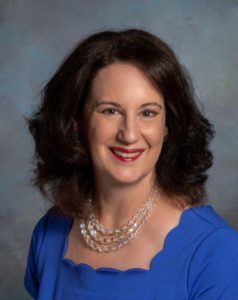
Dre Anthes, Director of Graduate Admissions, was a guest speaker at Virginia Union University on Wednesday, Oct. 9. She presented information on graduate school to two different groups of students, including VUU’s Sydney Lewis School of Business.
Mark Snyder Performs at Breast Cancer Benefit

Assistant Professor of Music Mark Snyder performed with students Becky Brown and Paige Naylor at the Second Annual Under 40 Music Marathon, an event dedicated to raising breast cancer awareness in men and women under the age of 40.
From Sept. 27-29, Hard Rock Cafe – Washington, D.C., City of Hope, and Pink Jams! partnered for the Second Annual Under 40 Music Marathon. With the help of 250 local musicians and hundreds of supporters, the event raised over $15,000!
A wide variety of local, regional, and national musicians played back to back continuously for 39 hours and 59 minutes. All in the name of breast cancer awareness.
Donations from the Marathon will go to support City of Hope’s life-saving breast cancer research and treatment programs, and helps Pink Jams! eradicate the misconception that breast cancer awareness begins at age 40.
Domain of One’s Own Initiative Goes International!
UMW’s Domain of One’s Own Faculty Initiative was one of five featured live video-streamed sessions at the referred 2013 International Society for the Scholarship of Teaching and Learning (ISSOTL) conference in Raleigh, N.C. on Oct. 3, 2013.
Our panel session, ‘What is the role of ‘Digital Scholarship’ in Higher Education, Faculty Development and the Scholarship of Teaching and Learning?’ provided a unique opportunity for the international SOTL community to consider the role of ‘open’ digital scholarship within and across disciplines, faculty development efforts and explore implications of digital scholarship within the broader higher education community.
Panel members included:
Professor Martin Weller author of The Digital Scholar: How Technology is Transforming Scholarly Practice at the Institute of Educational Technology Professoriat at The Open University, United Kingdom was brought in remotely to the panel session to share his scholarly work on groundbreaking work with digital scholarship and set the stage for UMW’s innovative Spring 2013 Faculty initiative.
Dr. Gary Poole, Professor and Associate Director of the School of Population and Public Health at the University of British Columbia, Vancouver served as panel moderator. He has published extensively, co-authored Effective Teaching with Technology in Higher Education, has numerous SoTL publications, and served as the Director for the Scholarship of Teaching and Learning at UBC.
Dr. Mary Kayler (Director, Center for Teaching Excellence & Innovation) presented on the faculty development model and theoretical framework to support faculty innovation practices and reported out faculty data related to digital scholarship.
Dr. Andrea Livi Smith (Assistant Professor, Historic Preservation) shared her experiences with the faculty initiative and showcased her domain andrealivismith.com.
Andy Rush and Tim Owens (Division of Teaching and Learning Technologies) presented on the innovative culture at UMW showcasing past DTLT initiatives and the groundwork for building the Domain of One’s Own Project.
ISSOTL serves faculty members, staff, and students who care about teaching and learning as serious intellectual work; fostering inquiry and dissemination about post-secondary learning and teaching.
Chiang Publishes Book in Series
“Developments of Harmonic Maps, Wave Maps and Yang-Mills Fields into Biharmonic Maps, Biwave Maps and Bi-Yang-Mills Fields” by Yuan-Jen Chiang, professor of mathematics, was published by Birhauser, Springer, Basel, in the series of “Frontiers in Mathematics” in Europe.
She presented “Developments of Harmonic Maps into Biharmonic Maps” at the second Pacific Rim Mathematical Association Congress, which occurs every four years, in Shanghai, China. She also presented “Harmonic and Biharmonic Maps between Riemannian Manifolds” at a Colloquium of Mathematics Department, National Taiwan Normal University in Taipei.
Janusz Konieczny Leads Seminar at VCU
Janusz Konieczny, professor of mathematics, gave an invited talk, “The Commuting Graph of the Symmetric Inverse Semigroup,” at the Analysis, Logic and Physics Seminar at Virginia Commonwealth University.
Cooperman Blogs for USAPP
Rosalyn Cooperman, Associate Professor of Political Science, wrote an invited post for the London School of Economics USA Politics & Policy blog on divisions among congressional Republicans and the government shutdown. Cooperman states that most House Republicans have no electoral incentive to compromise with congressional Democrats. Those Republicans who do represent swing districts with large populations of federal workers and retirees.
UMW Survey Receives Extensive Coverage
A survey of Virginia voters designed by Stephen Farnsworth, professor of political science and director of the University’s Center for Leadership and Media Studies, has received extensive media attention, including reports in:
The Washington Post , Politico , Daily Kos , Real Clear Politics , WRC-TV, Washington , WTOP , WAMU , The Richmond-Times Dispatch , The Daily Press of Hampton Roads and The Free Lance-Star.
Jim Groom Delivers Keynote at University of North Florida
On Oct. 1, Jim Groom delivered the keynote address “ds106: This Course Could be Your Life” as part of the inaugural Academic Technology Innovation Symposium at the University of North Florida. The presentation frames how all too often technology becomes a tool fetish or a solution to a problem,yet neither of these approaches is particularly meaningful when it comes to creating a learning community. Using the example of the digital storytelling community/course at UMW (http://ds106.us), this presentation demonstrated how a 25 person course at a small liberal arts college in Virginia became a global learning community. The power of teaching and learning online is not about the shiny object or the solution-minded endgame, but rather the possibility to transcend them both through human interaction on a scale hitherto unimaginable. This is a point that is tied back to initiatives like Domain of One’s Own that attempts to establish the fact that the only thing that truly scales on the web when it comes to social interactions is an individual’s seamless participation within this online ecosystem.
Al-Tikriti Presents Paper at Turkish Maritime History Conference
On Sept. 28, Nabil Al-Tikriti offered a presentation entitled “Advocating for Release: The al-Darani Appeal” to the International Symposium on Piri Reis and Turkish Maritime History in Istanbul, Turkey. The conference, which brought together several dozen Ottoman maritime history experts from all over the world, was hosted by the new Prime Minister’s Ottoman Archives. Invited by the conference organizers, Prof. Al-Tikriti presented his analysis of two letters sent by a prisoner of the Knights of St. John, based in Rhodes. Organizers plan to complete an edited volume of conference presentations by the end of the year. This conference was hosted by the Turkish Historical Foundation, the Prime Minister’s Ottoman Archives, and the Ataturk Supreme Council for Culture, Language, and History. Here is a link to the conference program: http://sempozyum.ttk.gov.tr/eng/PiriReis_Program.pdf
Here is Prof. Al-Tikriti’s conference abstract:
“In 1504, in the midst of lengthy prisoner negotiations between Şehzade Korkud (d. 1513) and the Knights of St. John of Jerusalem, the Ottoman prince demanded the immediate release of fourteen Muslim prisoners. One of those he named was a certain “Hajji Abu Bakr.” It is probable that this individual was Abū Bakr al-Dārānī, who had sent a letter to Korkud appealing for his rescue from these Knights of Rhodes. His letter, probably written at some point in 1502-1503, was transcribed and inserted into Korkud’s 1508 magnum opus, Da‘wat al-nafs al-ṭāliha. Steeped in the rhetorics of ghazā’, al-Dārānī used arguments which combined the imperatives of militant piety, real world enrichment, and political calculation. As this prisoner saw it, the Knights were perfidious infidel pirates who never honor their agreements, pillage throughout the region, enrich themselves at the expense of Muslims, enslave ten Muslims for each one that they release, and oppress the Greeks (Rūm) who populate Rhodes. According to al-Dārānī, their harm to Islamdom was so severe that even if the Ottomans were to capture all of Christendom yet fail to capture Rhodes, they would have accomplished nothing. Al-Dārānī also set out to counter two widely-held beliefs concerning the Knights in Rhodes – that they would be difficult to conquer and that they possessed nothing worthy of the expense. Considering that only 600 Knights resided on the island, the prisoner insisted that the islanders would help the Muslims take the island, and that it would be easy to take. Not only were the Knights vulnerable, but they possessed great wealth, and their wealth was more than sufficient to compensate for any costs incurred by invading the island. Closing with political arguments concerning the dangers the Knights posed to Ottoman sovereignty, al-Dārānī, concluded that the Ottomans should waste no time invading Rhodes. Sources provide no sure indication whether al-Dārānī and the other prisoners listed in Korkud’s 1504 request were ever freed. However, another undated letter by a certain Taḳīyüddīn Dārānī of Ṭrablus-i Şām also urging an invasion of Rhodes provides several hints as to what might have ensued with these prisoners.
In my presentation, I examine these two letters in some depth and elaborate on what they tell us about Ottoman-Knights relations around the turn of the 16th century. I also explore some of the broader implications concerning enslavement, raiding, piracy, and Muslim-Christian conflict in the Eastern Mediterranean during the same period.”
Erchull and Liss Publish Paper with Former Student
Dr. Mindy Erchull and Dr. Miriam Liss, along with a former student Stephanie Lichiello, recently had a paper titled “Extending the Negative Consequences of Media Internalization and Self-Objectification to Dissociation and Self-Harm” published in the October online first edition of the journal Sex Roles. Our findings suggest that self-harm and dissociation, both outcomes associated with the literature on trauma, are related to self-objectification and media internalization. We suggested that objectification could be considered a form of insidious trauma or microaggression.